
Krassimir Terziev’s exhibition, “Late Night Talks with My Modern Ancestors”, approaches modernism not as a finished era but as a conversation that is far from over. The works, produced between 2017 and 2026, revisit key works of modernism. These references neither constitute a pantheon of artists nor a system of quotations. Terziev subjects inherited forms to new material conditions. Gold leaf disrupts non-objective simplicity; wood resists the grid form; heat bends minimalist geometry; pigment seeps through coarse fabric; and a moving camera transfers its impact from the body to architecture. The term “late night” in the exhibition’s title evokes an encounter where official histories end, absolutes dissolve, and precursors can be treated as challenging figures. In the context of the ecological crisis, technological mediation, and the political exhaustion of modernity, promises of universality are reevaluated.
Krassimir Terziev is an interdisciplinary artist whose work spans a diversity of media, including video/film, photography, painting/drawing, and text, questioning the boundaries between reality and fiction, while exploring the manifold transitions and tensions between a globalized world, dominated by overwhelming multiplicity of symbolic imagery, and its material groundings in technological, physical and human ‘hardware’.
He holds a Ph.D. in Cultural Anthropology from Sofia University (2012), where is lecturing since, and an MA degree in Painting from the National Academy of Arts, Sofia (1997), where he lectured from 2009 to 2016.
His work is part of the collections of Centre Pompidou/MNAM, Paris; Arteast 2000+ Collection, Moderna Galerija Ljubljana; Sofia City Art Gallery, Sofia; Art Collection Telekom, Bonn; Kunstsammlung HypoVereinsbank, Munich; Gaudenz B. Ruf Collection, Zurich/Vienna; Vladimir Illiev Collection, Sofia; Art Project Depot, Sofia; Dana and Georgi Voynov Collection, Sofia/Bucharest; among others.
Born 1969 in Dobrich, Bulgaria. Lives and works in Sofia. Member of the Institute of Contemporary Art – Sofia
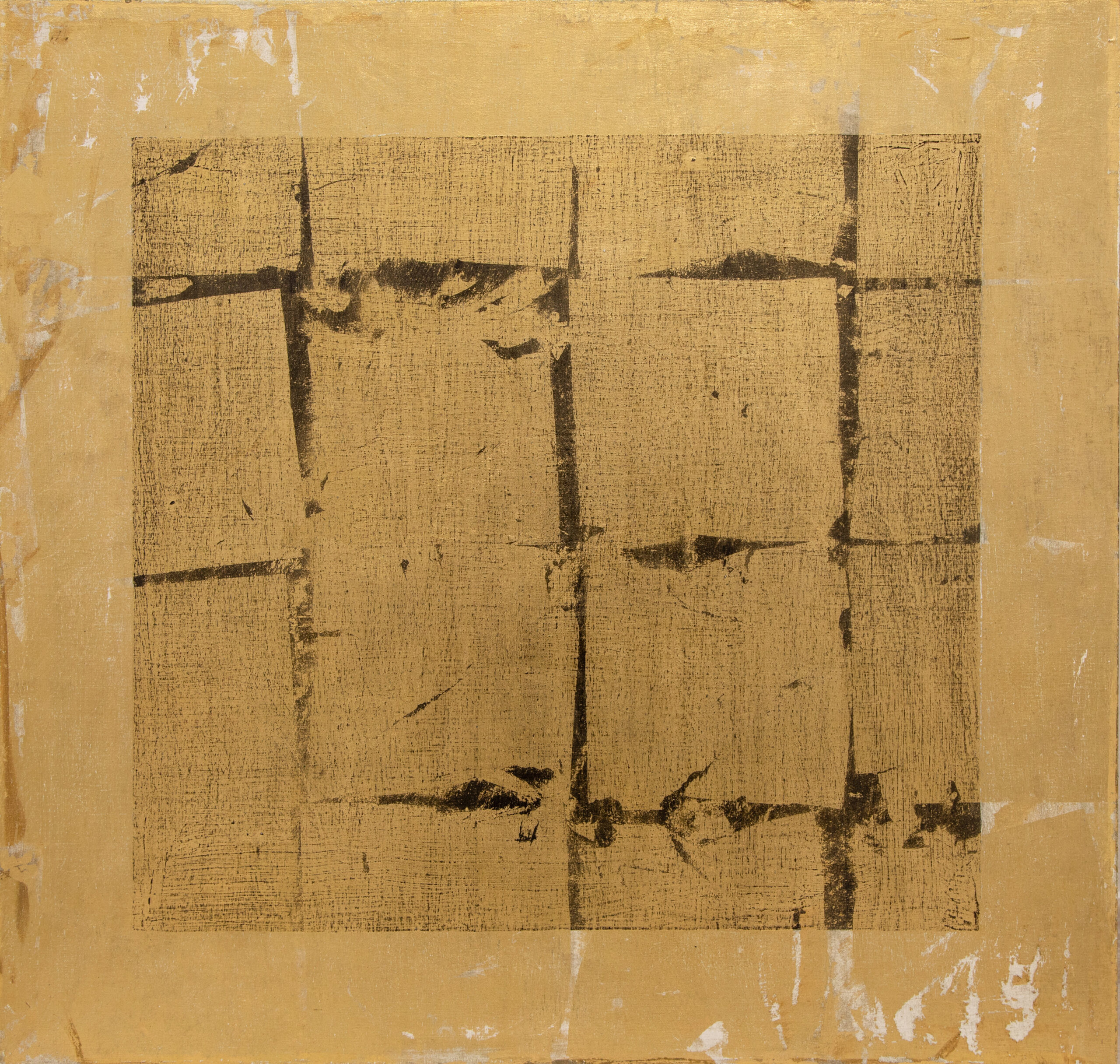
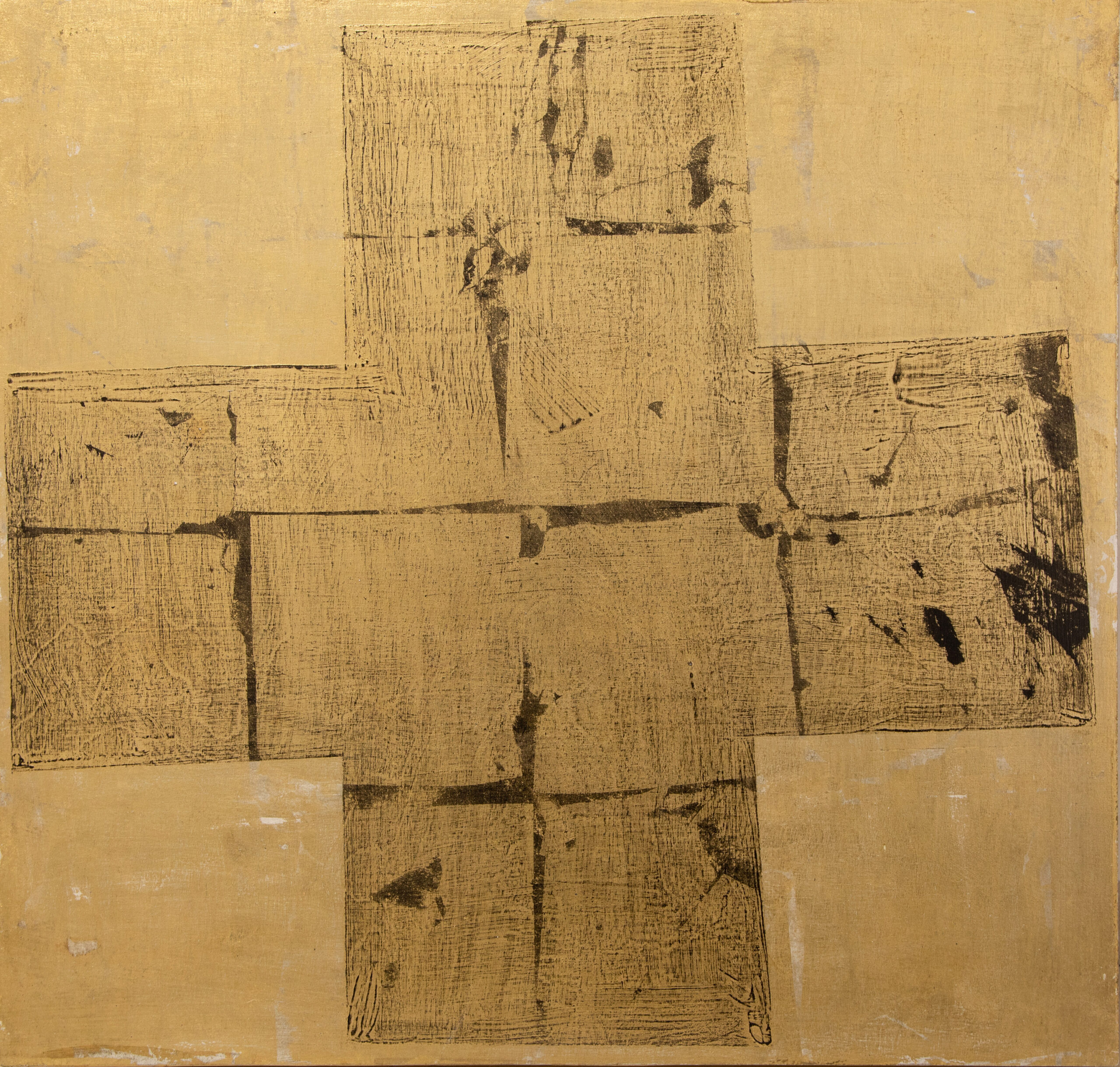
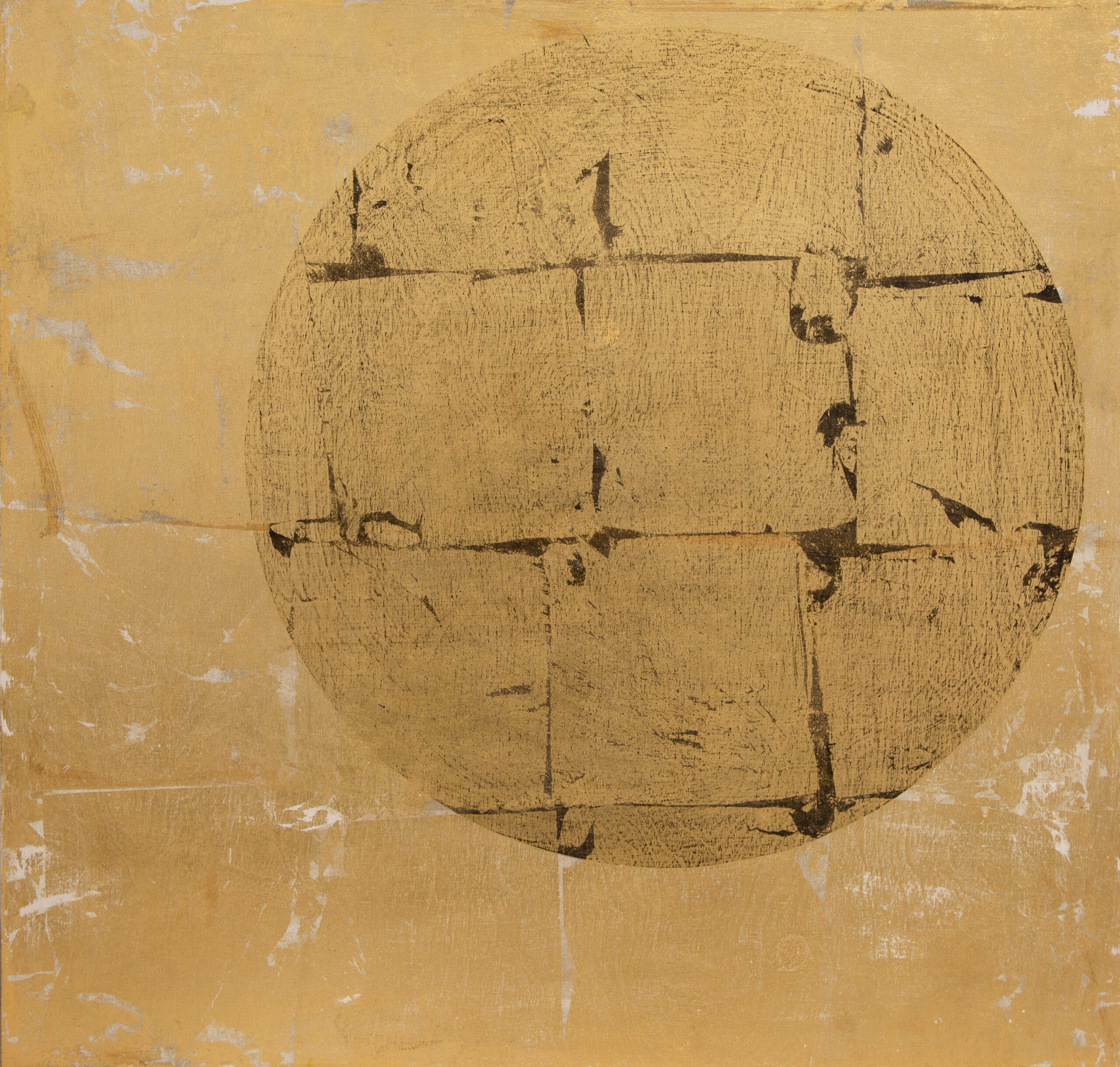
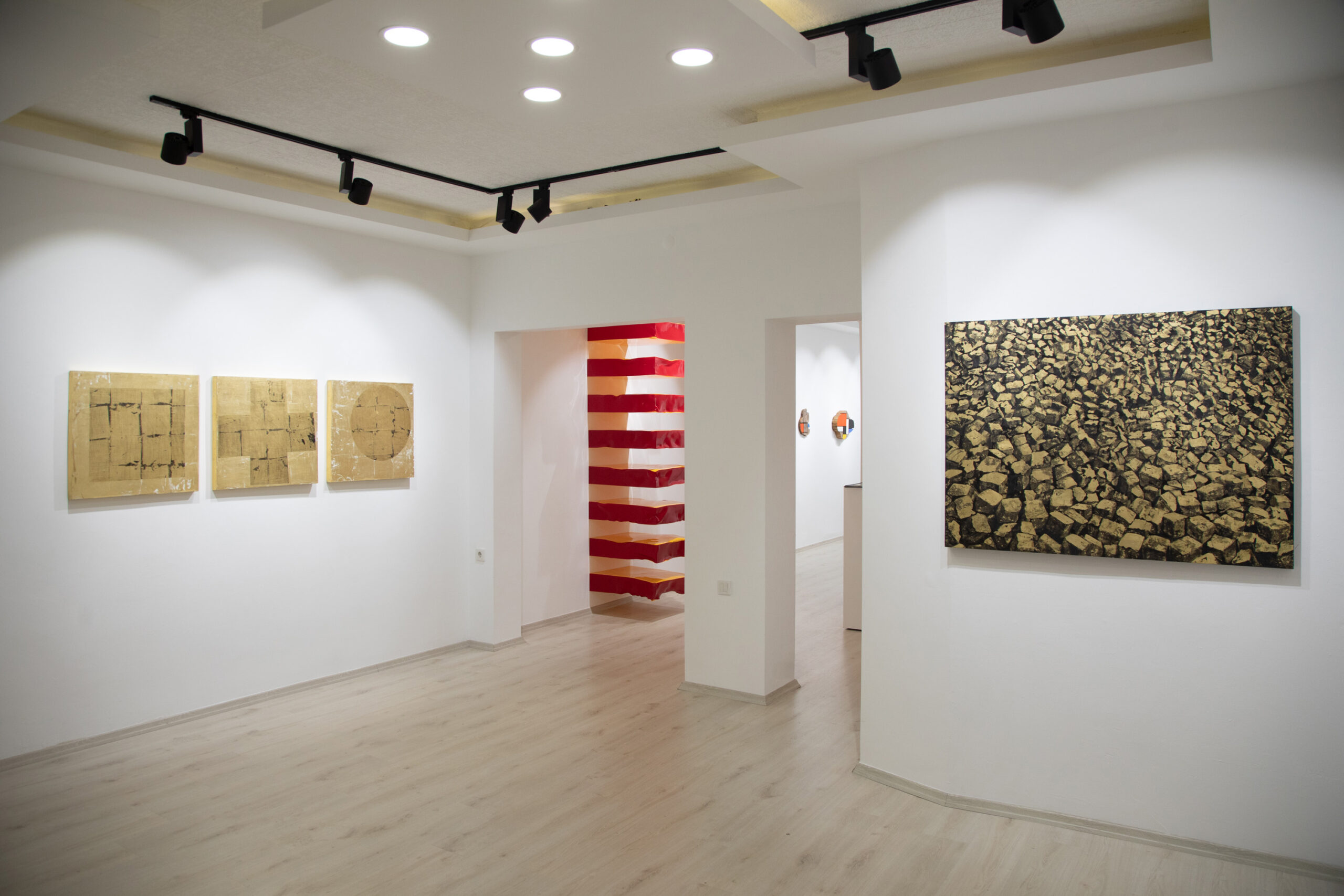
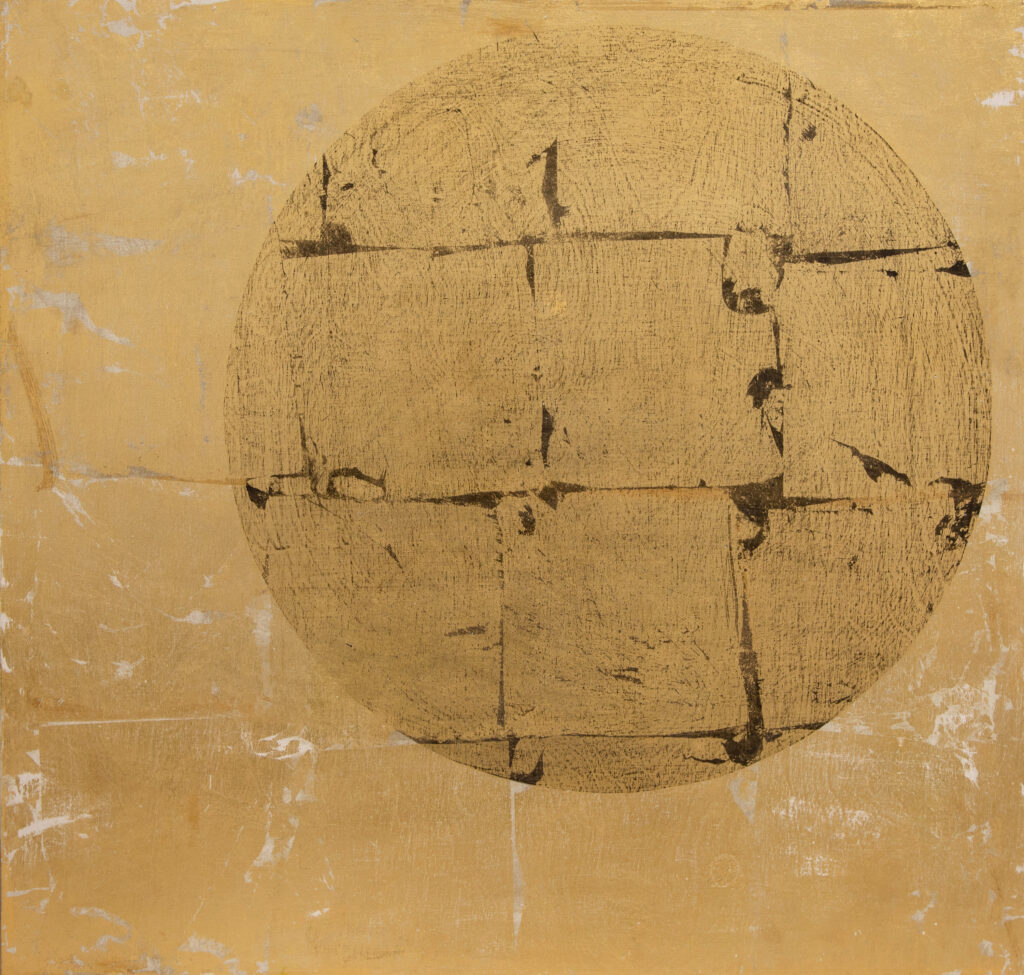
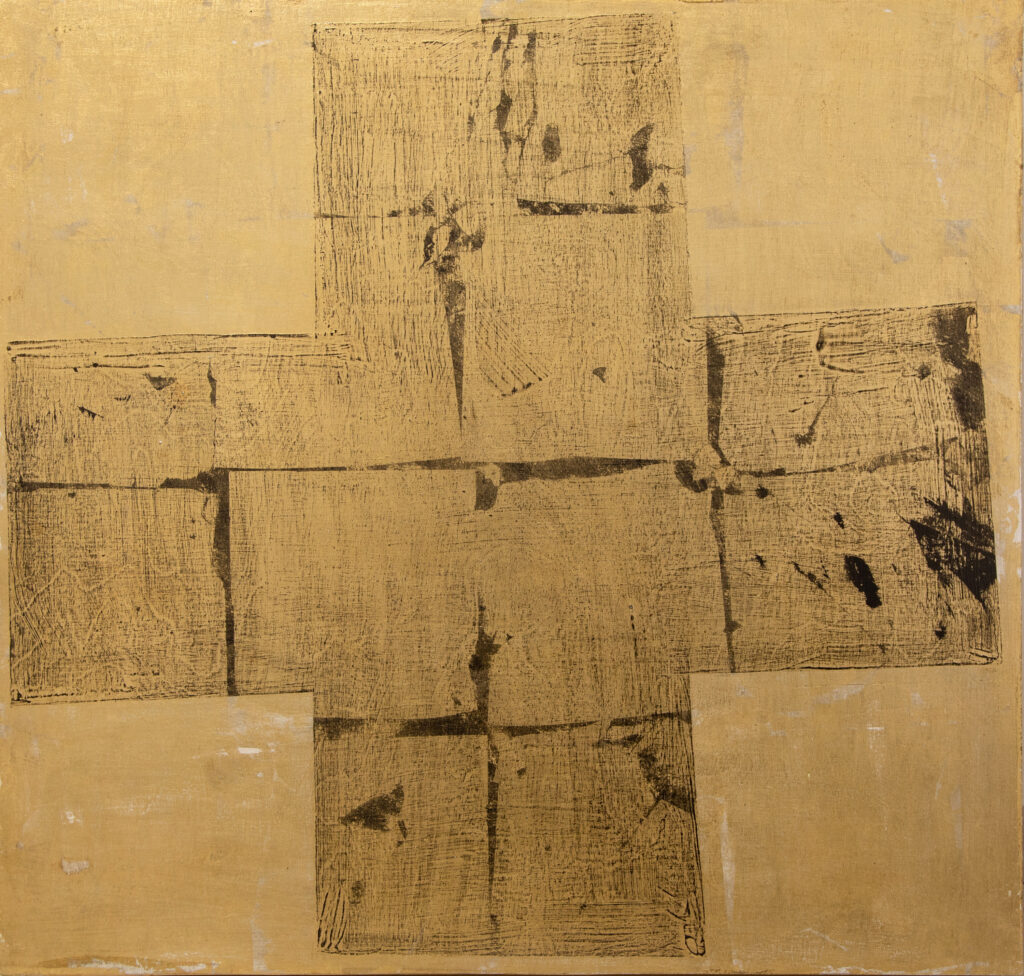
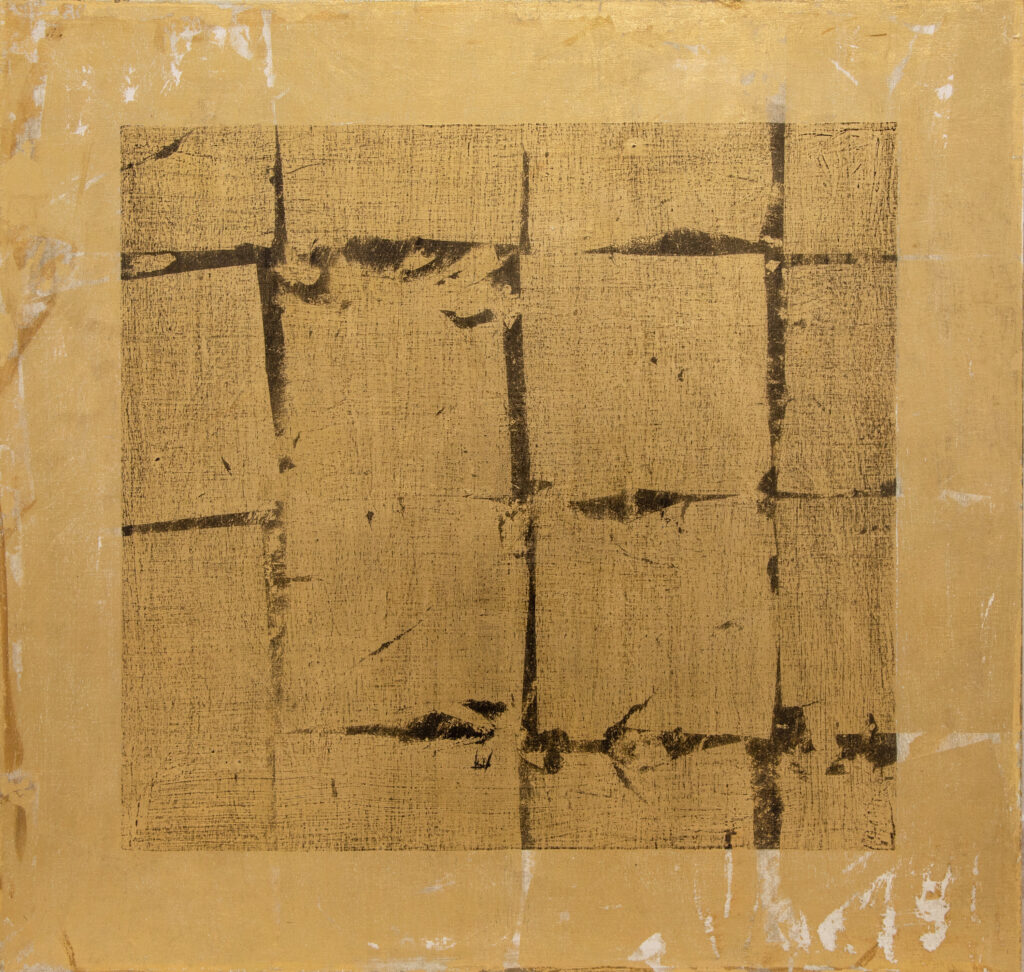
Terziev’s “Gold Leaf on Black Icons (After Malevich)” (2026) — a triptych composed of gold leaf and black-and-white acrylic on plywood—reintroduces the tension between the non-objective image and the sacred icon present in Malevich’s “Black Square”. Exhibited in 1915 in a high corner typically reserved for icons, Malevich’s work proclaimed a radical break with representation while preserving the transcendent’s spatial structure. Terziev embodies this contradiction; while the gold leaf evokes sacred radiance and auras, the triptych almost resembles a group of worshippers. Wear and tear, imperfect borders, and the plywood’s grain connect the transcendent to touch and labor. The black square is no longer the “zero point” of the painting; it is a recurring, unstable icon of art history, revisited after the image of the absolute beginning has been transformed into cultural memory.
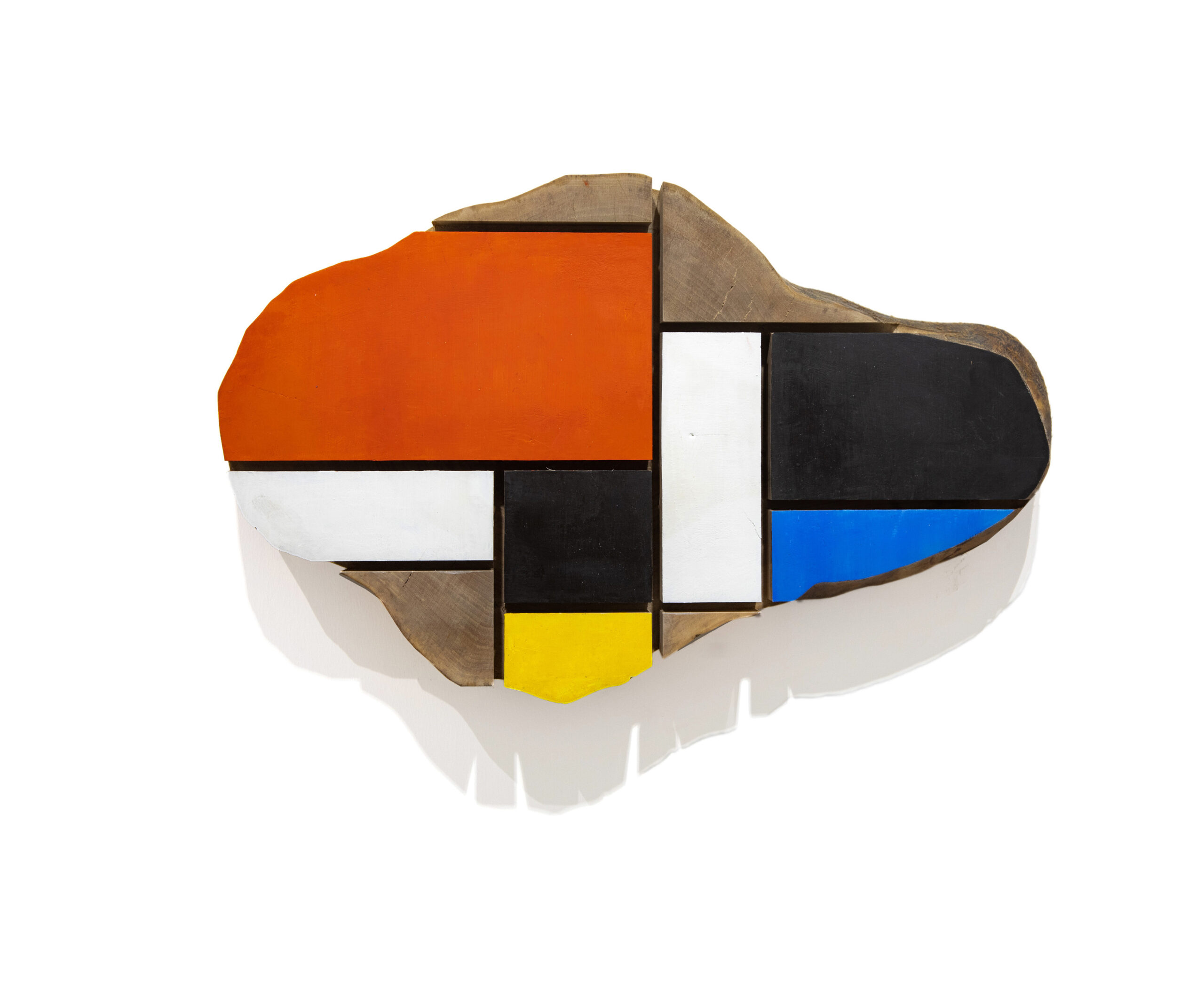
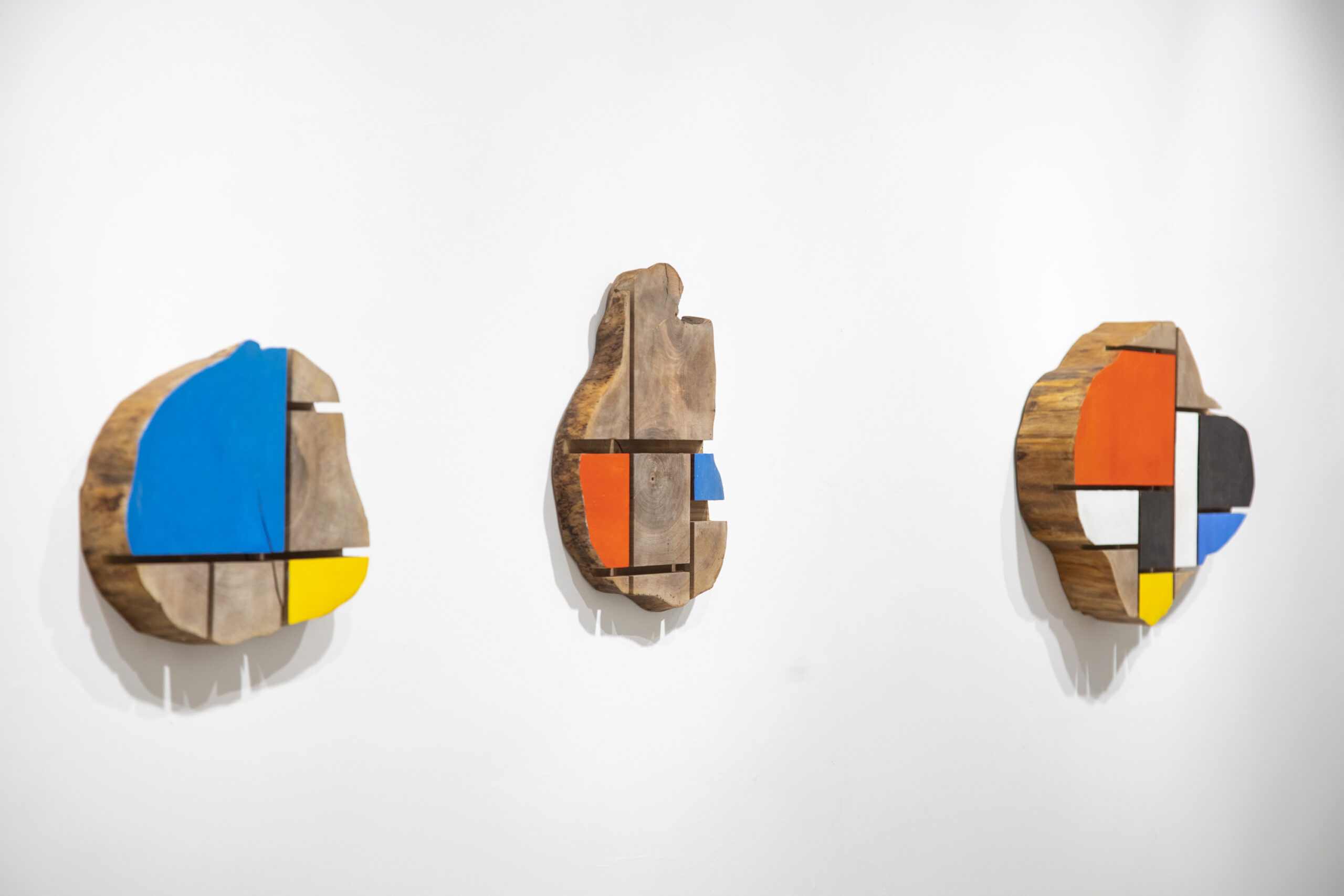
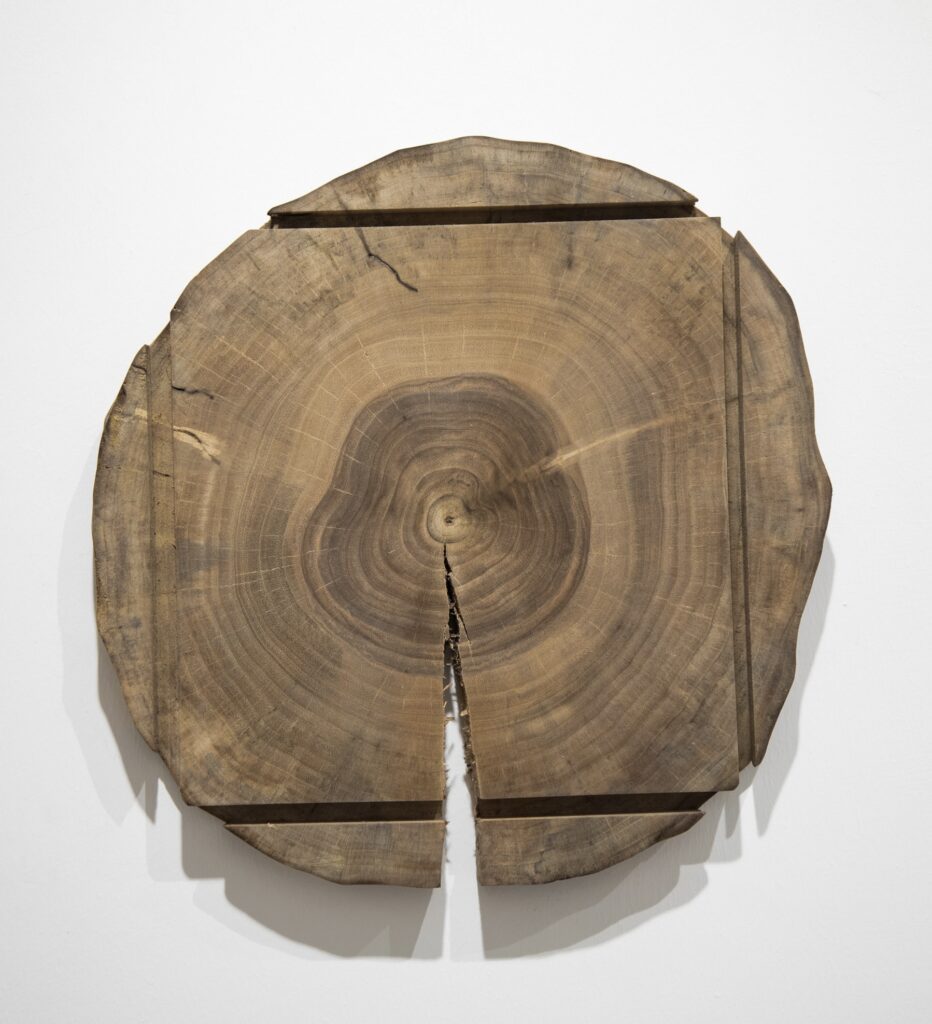
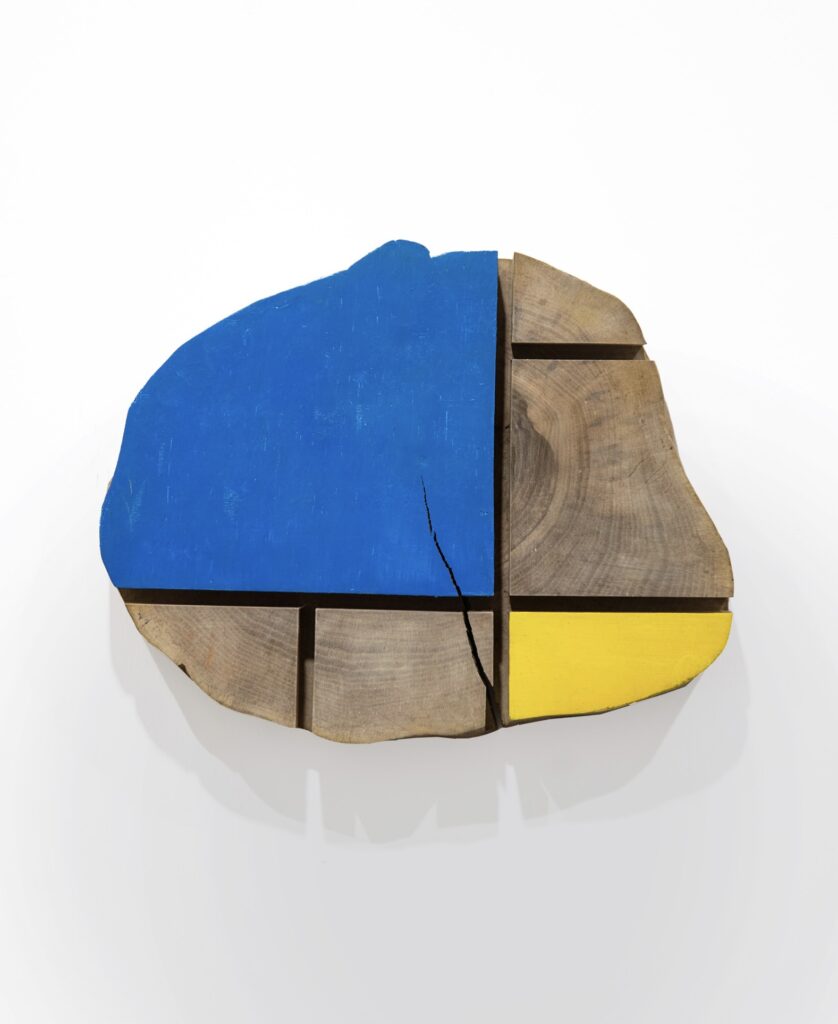
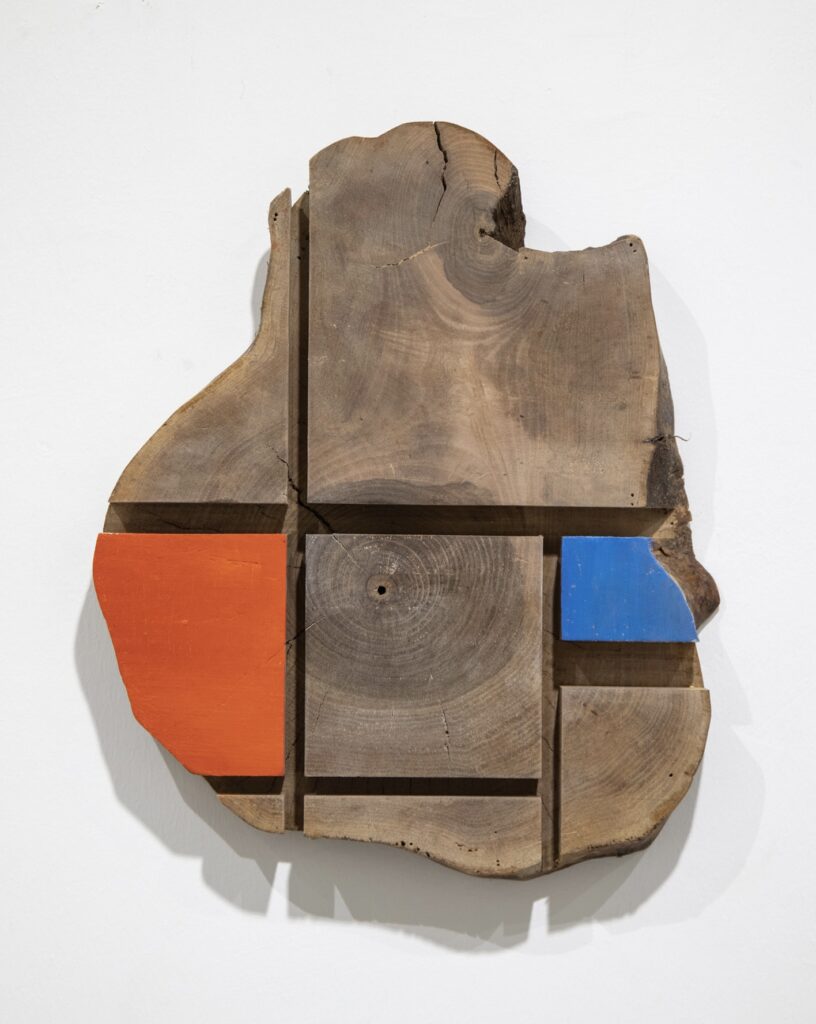
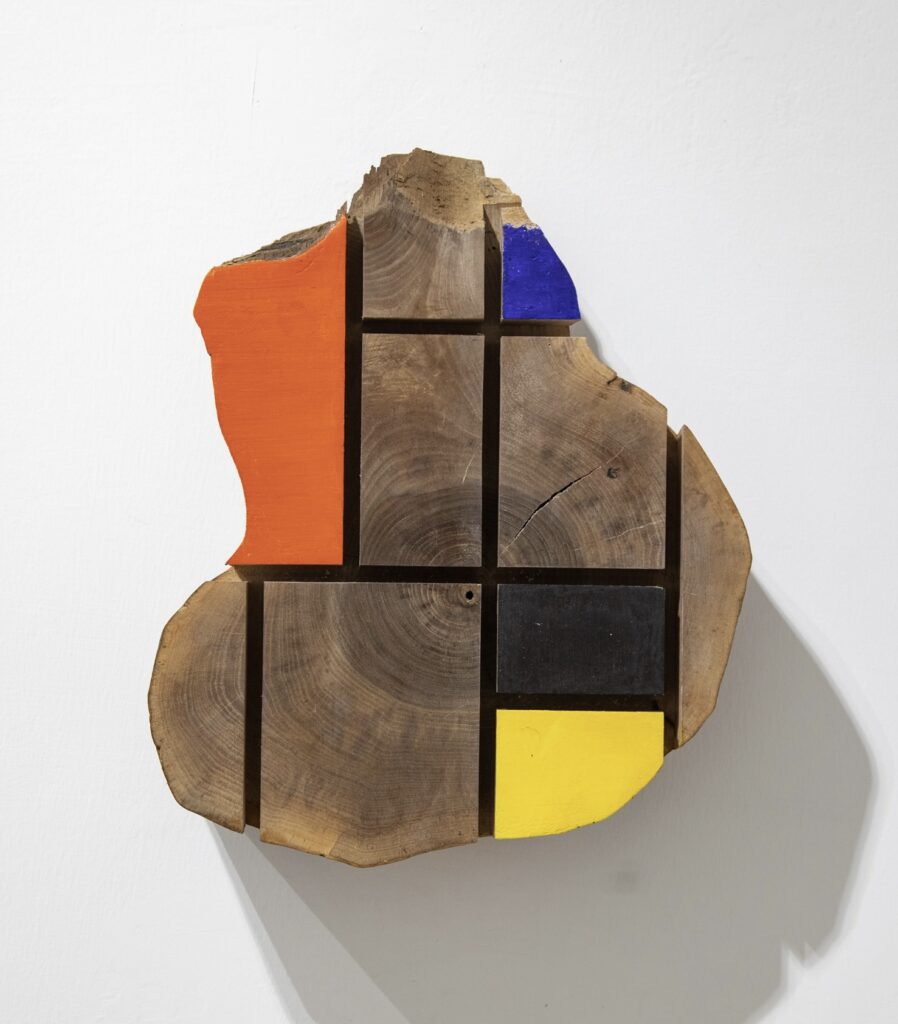
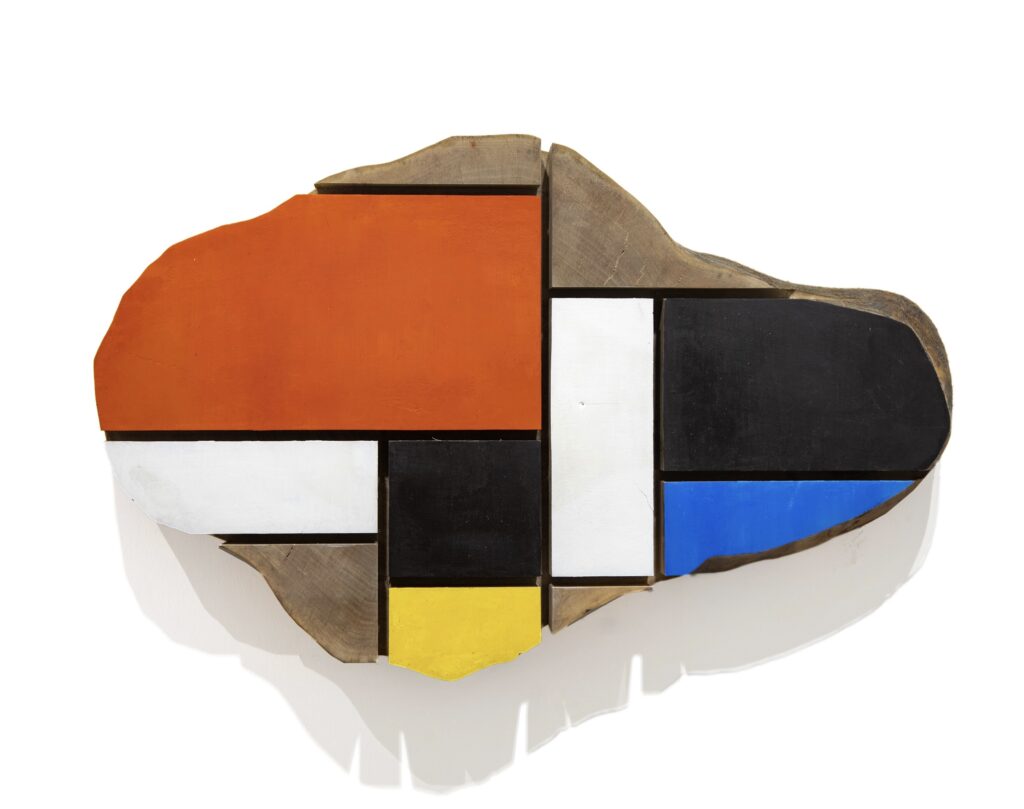
“Mondrian in the Logging” (2025) reverses yet another canonical movement toward abstraction. Eight image-objects—carved from walnut and beech wood and painted with oil paint—return Mondrian’s orthogonal language to the cut trunk of the tree. Mondrian’s late-period grid forms emerged as natural motifs gradually transformed into horizontal and vertical relationships. Here, however, growth rings indicate biological time, while the milling process signifies industrial production. The primary color sections fill the irregular wooden segments but do not dominate them. While the term “Logging” naturally refers to felling trees and recording data, it also relates to contemporary systems that transform the diversity of timber production into standardized units. Rosalind Krauss defined the grid form as a declaration of modernist autonomy, while Terziev traces it back to the history on which it is based. Here, abstraction must confront the organic economy of time, labor, and resources—an economy it once seemed to have transcended.
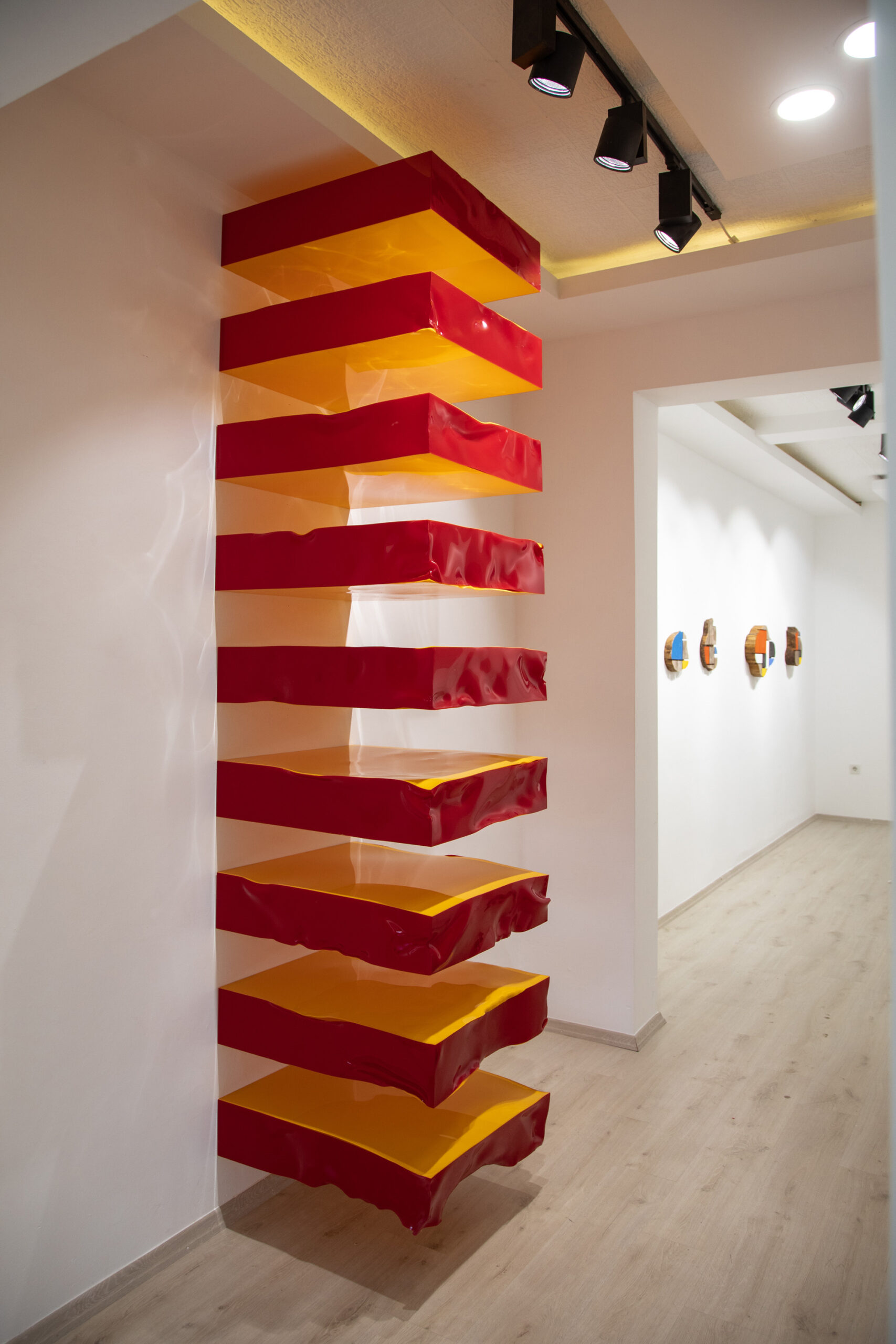
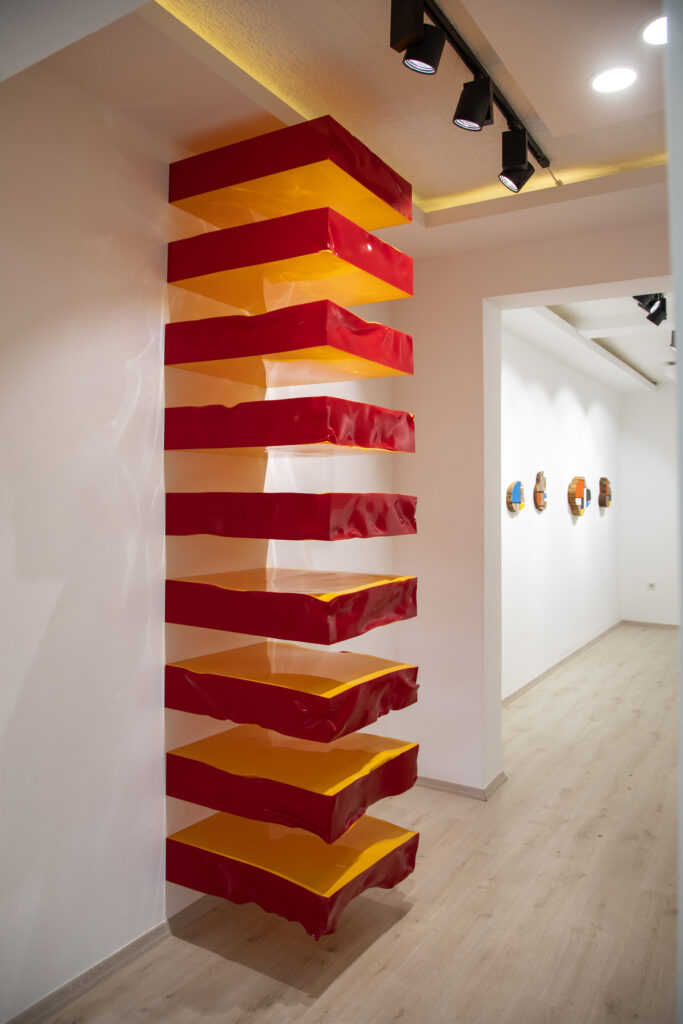
The vertical sculpture “Storm After Judd” (2025), composed of modified acrylic glass units, preserves the serial rhythm of Donald Judd’s stacks while dispelling his air of self-assurance. While Judd’s repeated units activate the relationship between object, wall, and surrounding space, his “Specific Objects” series championed forms that fell outside traditional categories. Terziev subjects this industrial syntax to high heat. Red and orange units sag and bend; the repetition remains, but the identity does not. The word “after” simultaneously signals both reference and consequence. Judd’s language is imbued with weather conditions; without depicting a single catastrophe, the sculpture makes climatic deterioration physically legible. As heat becomes a participant, the acrylic glass acquires a historical memory. The specificity here lies in the material’s irreversible response to an event.
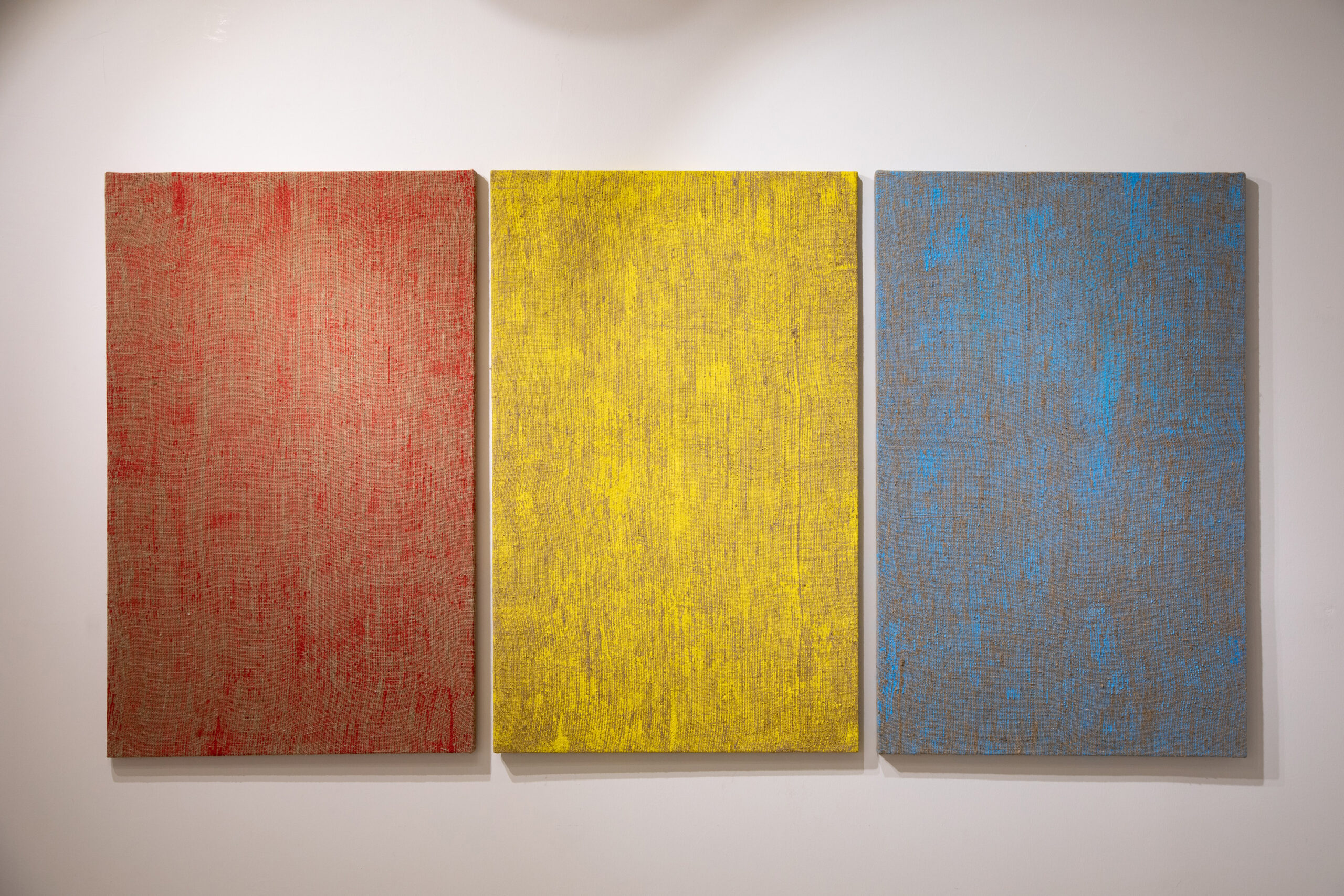
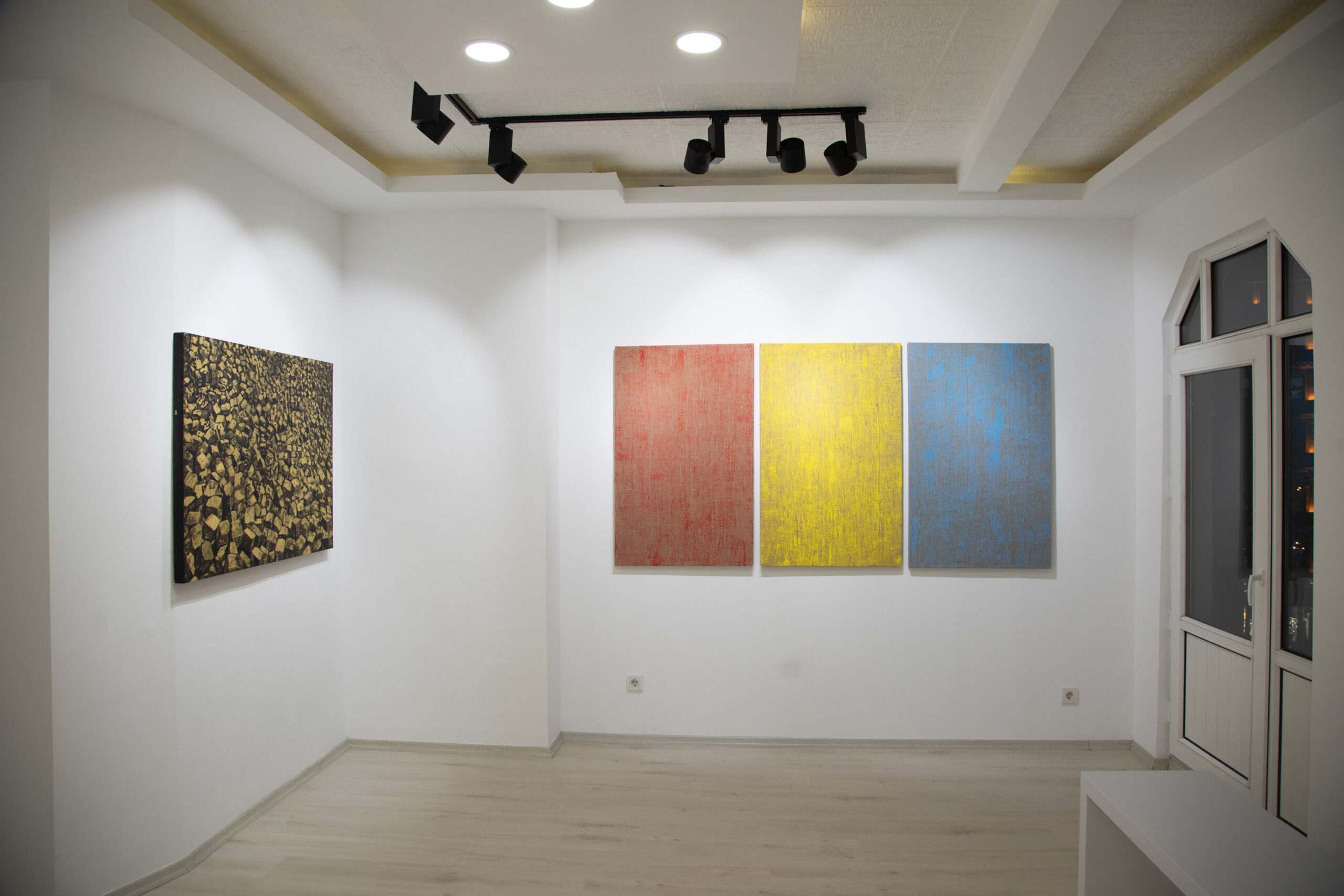
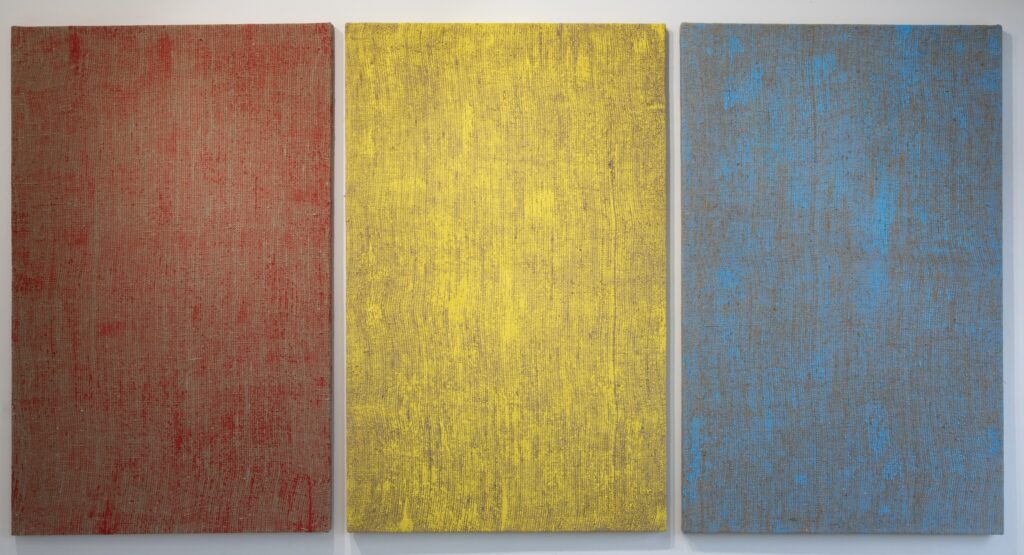
Who’s Afraid of the Other Side (2022) combines Rodchenko’s 1921 monochromatic paintings composed of three primary colors with Barnett Newman’s Who’s Afraid of Red, Yellow, and Blue. Terziev applies red, yellow, and blue acrylic paint to the backs of three canvases, so that viewers can see only the pigment seeping through the fabric. The burlap evokes labor, transportation, storage, and leather, giving the monochrome a physical presence. The work questions what lies behind modernist purity and, more broadly, what lies behind surfaces that conceal production systems while maintaining an apparent autonomy. The work’s political dimension is inseparable from its material realities—weaving, seepage, orientation, and the inaccessible reverse side.
“Late Night Talks with My Modern Predecessors” is, ultimately, an experiment in critical proximity. While Terziev stays close enough to canonical forms to affirm the validity of their original problems, he alters the physical rules that govern how these forms function. Art history is written through melting, cutting, seeping, reflection, and movement. The grid still provides order, a single color still focuses attention, the stack still organizes space, and the camera still examines movement—but each now carries within it the forest, the air, the body, the building, and the space it encounters. Here, Modernism becomes a repertoire within which its contradictions can be lived out, tested, and transformed. The past speaks in this exhibition, yet its voice is transformed through materials that the present responds to.
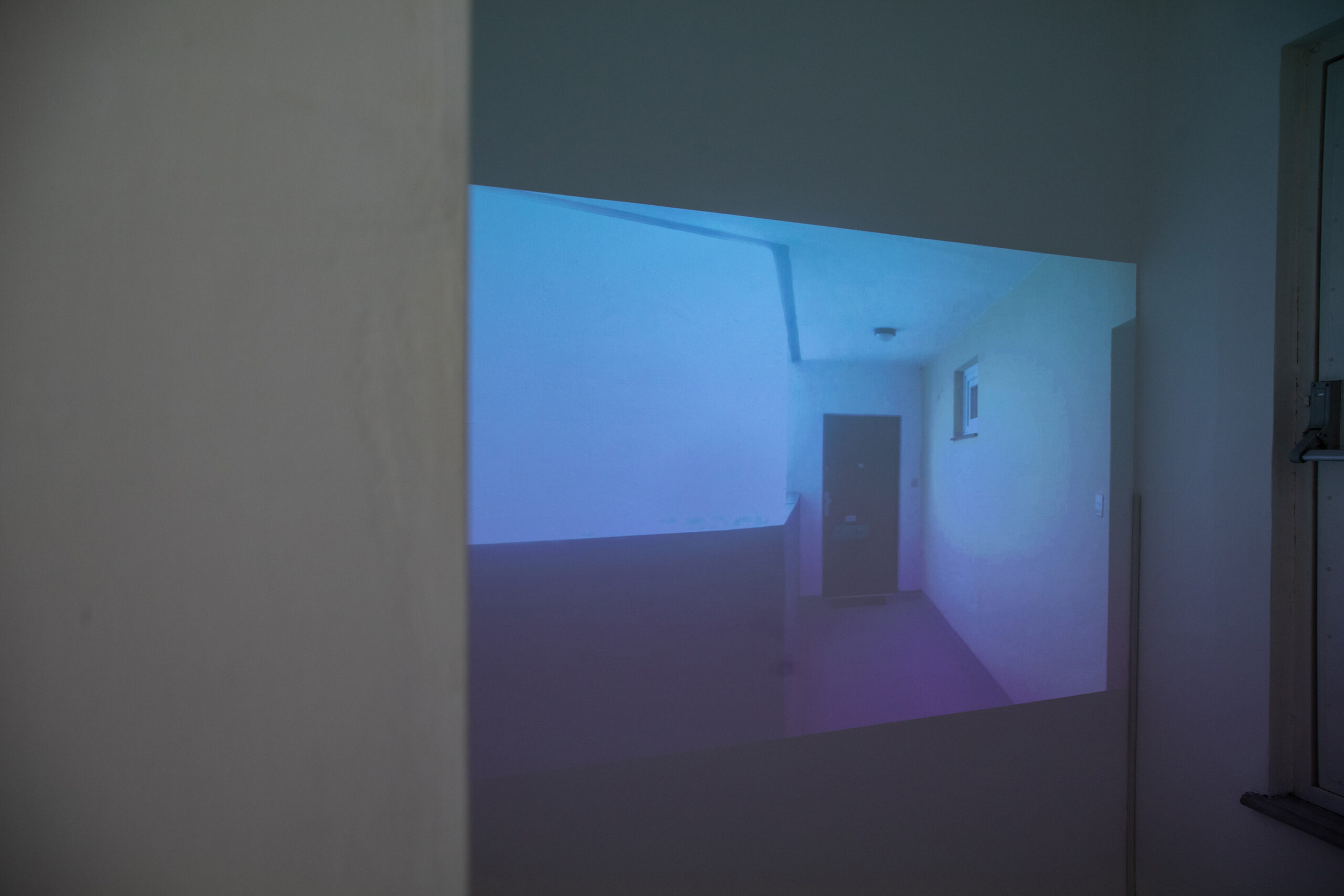
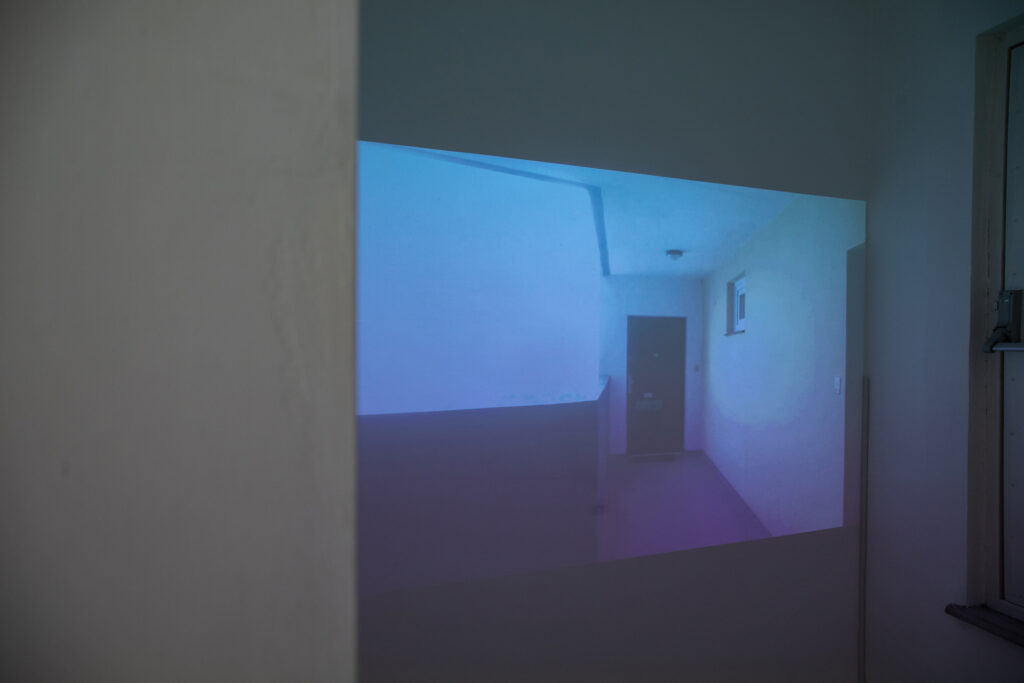
The twenty-four-minute film “Ghost Descending a Staircase” (2017), shot in collaboration with Daniel Kötter, shifts the exhibition’s focus from objects to the conditions of seeing. Cameras mounted on doors and windows that open and close create an image of descent as they transition between interior and exterior vistas, while the human figure vanishes. The title evokes Muybridge’s work, Duchamp’s “Nude Descending a Staircase (No. 2)” (1912), and Richter’s “Ema (Nude on a Staircase)” (1966). Terziev and Kötter eliminate the body that shaped this tradition, while the body’s ghost persists in the hinges, thresholds, and shifting perspectives. As the architecture—the fixed space of the action—transforms into a moving image, the camera’s non-human eye becomes embedded in the building. The film thus reshapes seeing as a choreography distributed among the apparatus, the structure, and the implied human movement.
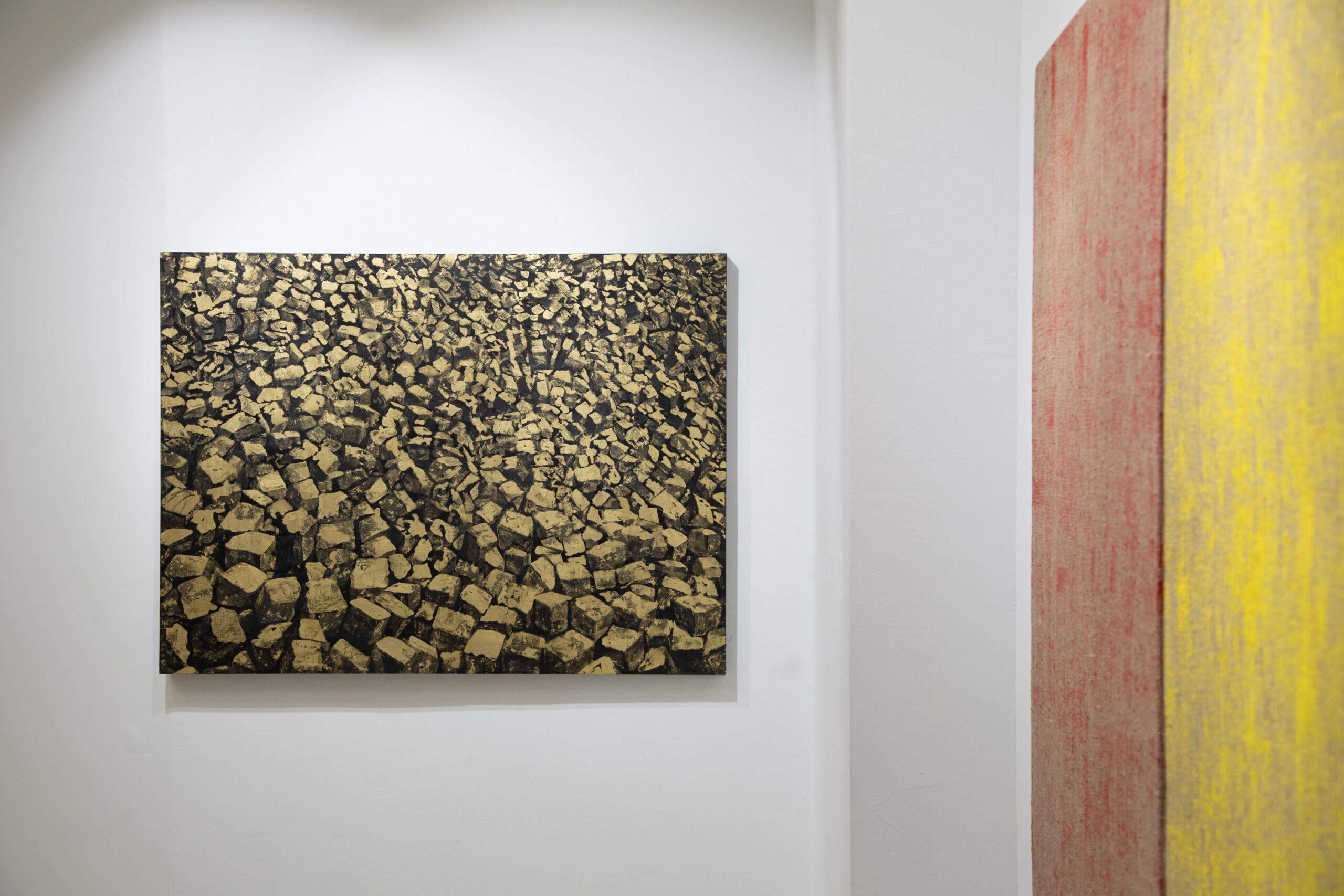
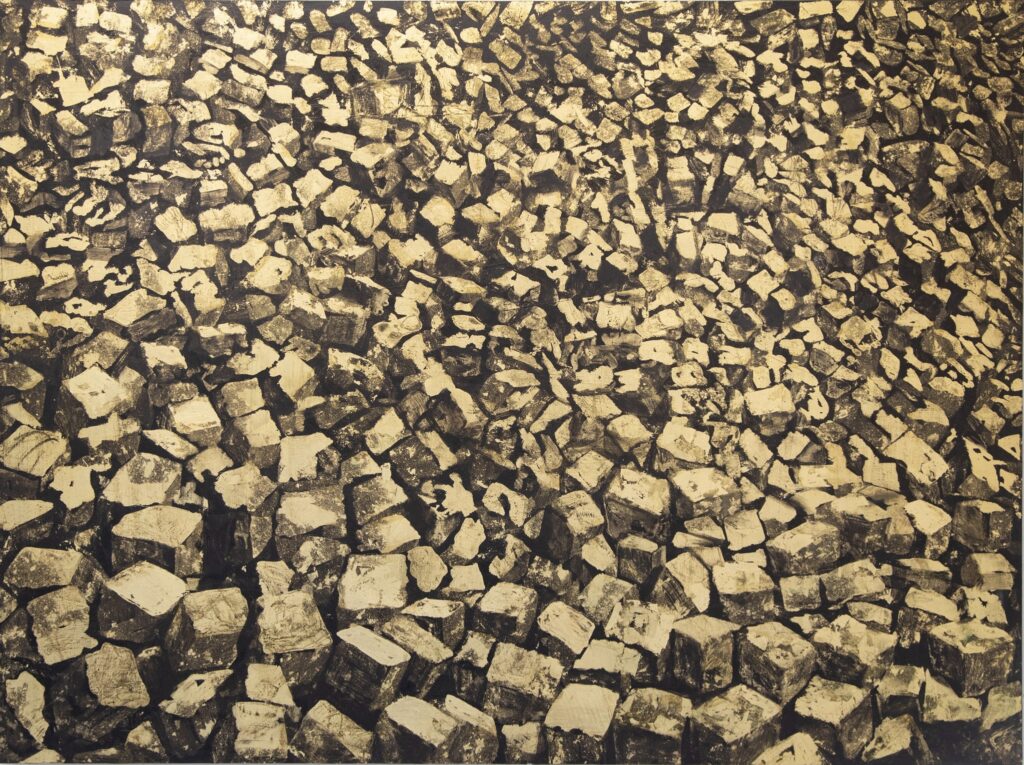
In Istanbul, the project’s engagement with a Turkish modernist is entirely structural. Erol Akyavaş is a prolific figure who challenges any monocentric history of modernism by bringing together geometric form, labyrinthine architecture, Islamic visual traditions, and Western abstraction. His work “Fall of the Castle” (1981–82) transforms architecture into a psychic, cultural, and geopolitical structure in a state of collapse. The dialogue established with Akyavaş enables Terziev to relate his deformed piles, cut-up wood, and permeable surfaces to the unstable city, positioning Istanbul as a space of plural modernities.
Gold Leaf on Black Icons on White
Background (After Malevich) #1
2026
tryptich, gold leaf, black, white
acrylics on plywood, 62/62 cm
Gold Leaf on Black Icons on White
Background (After Malevich) #2
2026
tryptich, gold leaf, black, white
acrylics on plywood, 62/62 cm
Gold Leaf on Black Icons on White
Background (After Malevich) #3
2026
tryptich, gold leaf, black, white
acrylics on plywood, 62/62 cm
Mondrian in the Logging #1
2025
router-cut walnut wood,
35 cm diameter, 4 cm depth
Mondrian in the Logging #2
2025
oil on router-cut walnut wood,
35 cm diameter, 4 cm depth
Mondrian in the Logging #3
2025
oil on router-cut walnut wood,
47/28 cm diameter, 6 cm depth
Mondrian in the Logging #4
2025
oil on router-cut walnut wood,
47/28 cm diameter, 6 cm depth
Mondrian in the Logging #5
2025
oil on router-cut walnut wood,
35/58 cm diameter, 7 cm depth
Storm After Judd
2025
sculpture modied acrylic glass
315/61/68 cm
Who’s Afraid of the Other Side
2022
tryptich acrylics applied on the back of
sackcloth 3 canvases 116/73 cm each in collection
Fallen Cities (after Akyavaş)
2026
gold leaf, acrylics/plywood,
93/125 cm
Ghost Descending a Staircase
2017
experimental lm (with Daniel Kötter)
24 min, HDV 1080P, PAL, color, sound
Cookies allow us to provide you with useful features and to measure performance in order to improve your experience. By clicking 'Accept all', you agree to the use of all cookies. For more information, see our Privacy Policy.
Manage your cookie preferences below:
Essential cookies enable basic functions and are necessary for the proper function of the website.
Statistics cookies collect information anonymously. This information helps us understand how visitors use our website.
Google Analytics is a powerful tool that tracks and analyzes website traffic for informed marketing decisions.
Service URL: policies.google.com (opens in a new window)