
Christo and Jeanne-Claude, as one of the most original partnerships in twentieth-century art, offered a new perspective on art history with their temporary interventions that transformed architecture, public space, and natural landscapes. The act of covering with fabric, while at first glance appearing as a gesture of concealment, is in fact an aesthetic strategy that reconstructs the conditions of visibility. As art critic David Bourdon puts it, these works are a practice of “revelation through concealment”; they alienate the familiar and make it possible to look at it anew.
The photographs, prints, drawings, and collages in this exhibition bear the traces of this paradox, going beyond being mere documentation of projects that no longer exist. Christo and Jeanne-Claude’s works exist in public spaces for a certain period, then are dismantled; only memory and traces remain. As Christo himself says, producing works that will disappear requires greater courage than producing permanent works.
According to Georges Didi-Huberman, an image should be read not only by what it shows, but also by the layers of meaning it subtracts, conceals, and signifies through its absence. Christo and Jeanne-Claude’s practice is situated precisely on this threshold. The veiled structure does not become invisible; on the contrary, it becomes visible again by shedding its usual meanings. The photographs and drawings are not documents replacing lost works, but independent works carrying the enduring memory of transience.
Given Collect Gallery’s Bulgarian origins, the exhibition is also closely related to Christo’s personal story. Born in Bulgaria, Christo has created a language that transcends borders and geographies throughout his life.
One of the strongest examples of this legacy still alive today is the La Caverne du Pont Neuf project by artist JR in Paris. The work was created to commemorate the 40th anniversary of The Pont Neuf Wrapped, which Christo and Jeanne-Claude transformed Paris’s oldest bridge in 1985. Like its predecessors, this work, through a brief intervention, revived the city’s memory, reminding us of the transformative power of transience and public art.
Christo and Jeanne-Claude’s work shows us that covering a structure is not about concealing it, but rather about making it visible again. Because sometimes, to truly see something, one must first imagine it in another way.
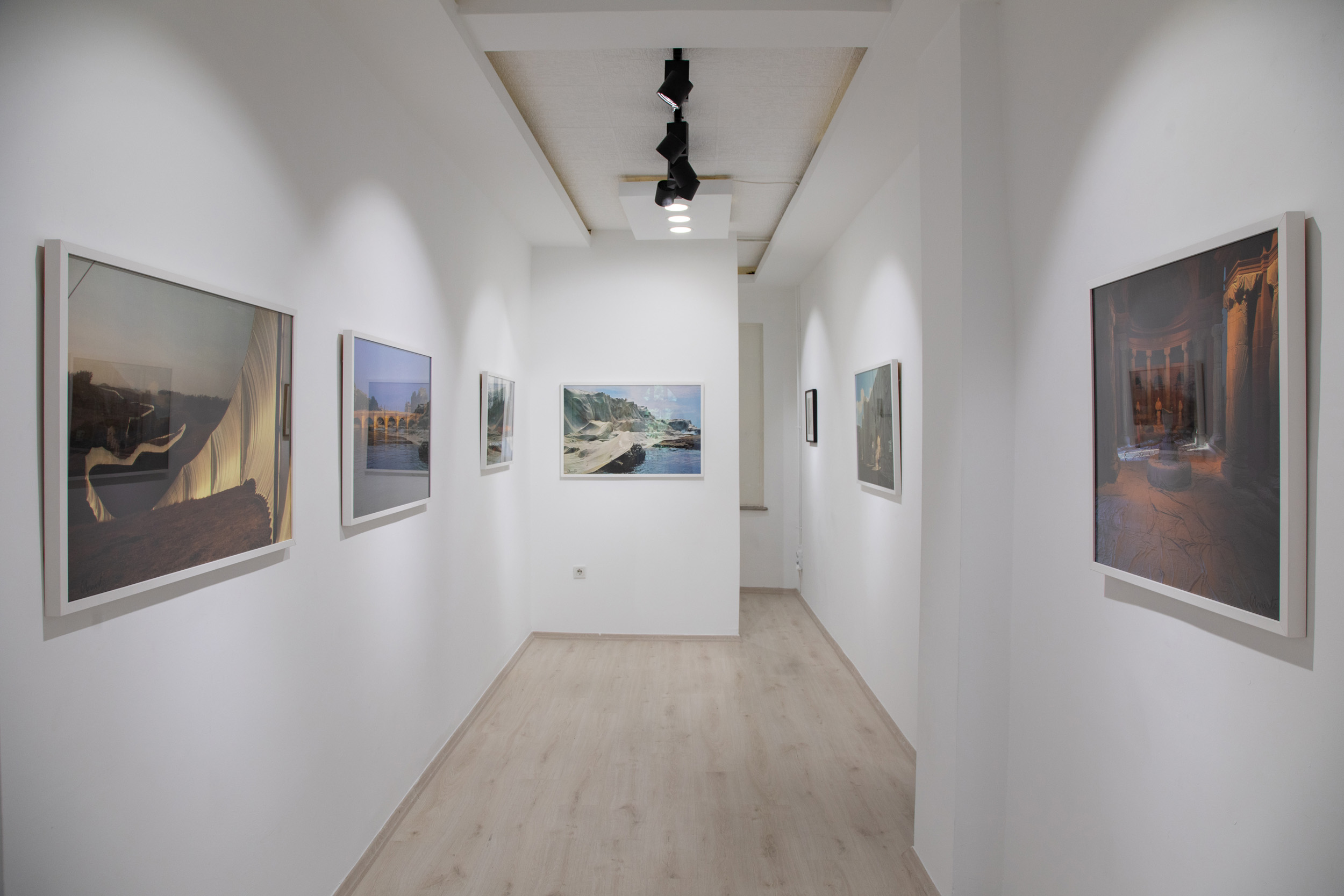
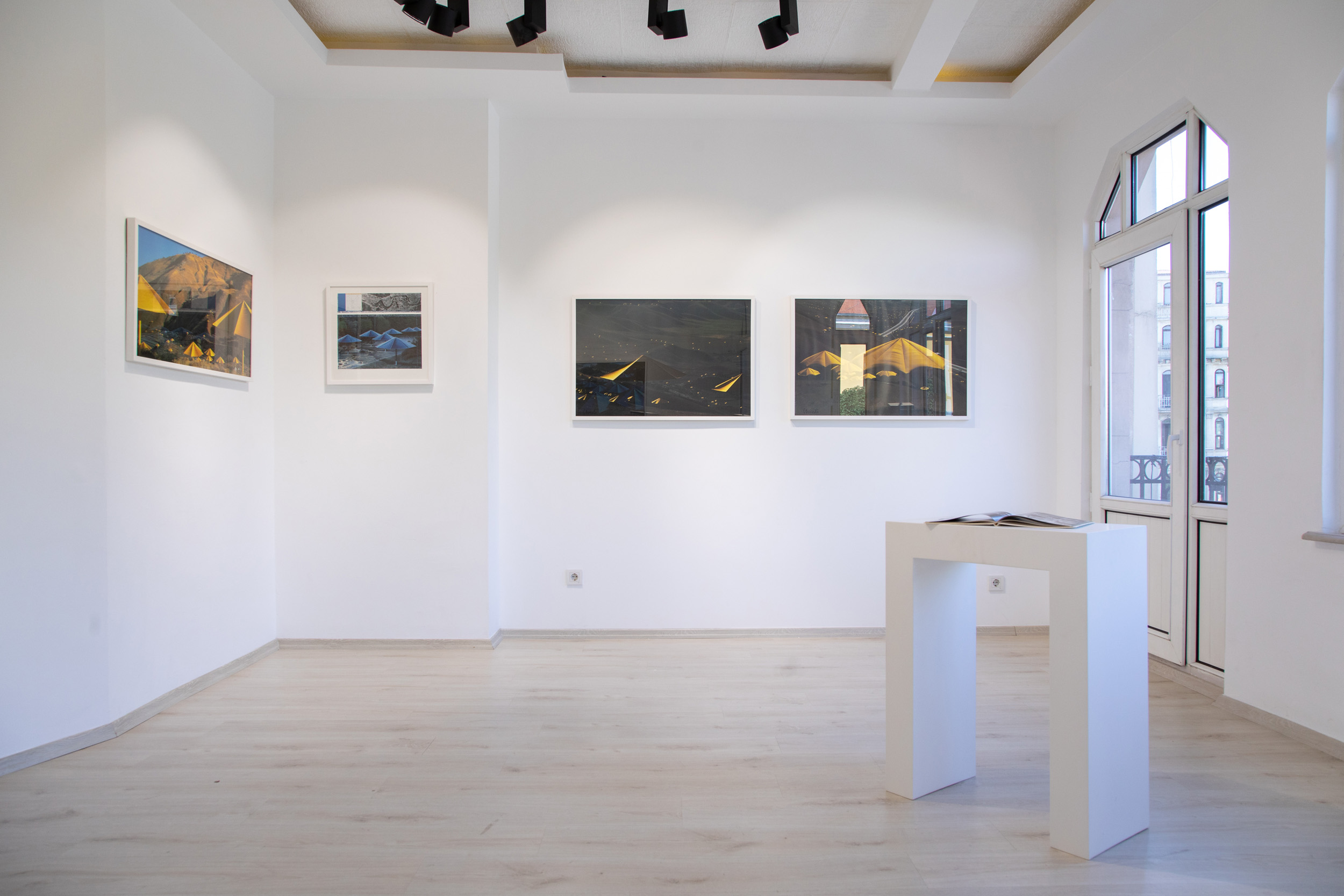
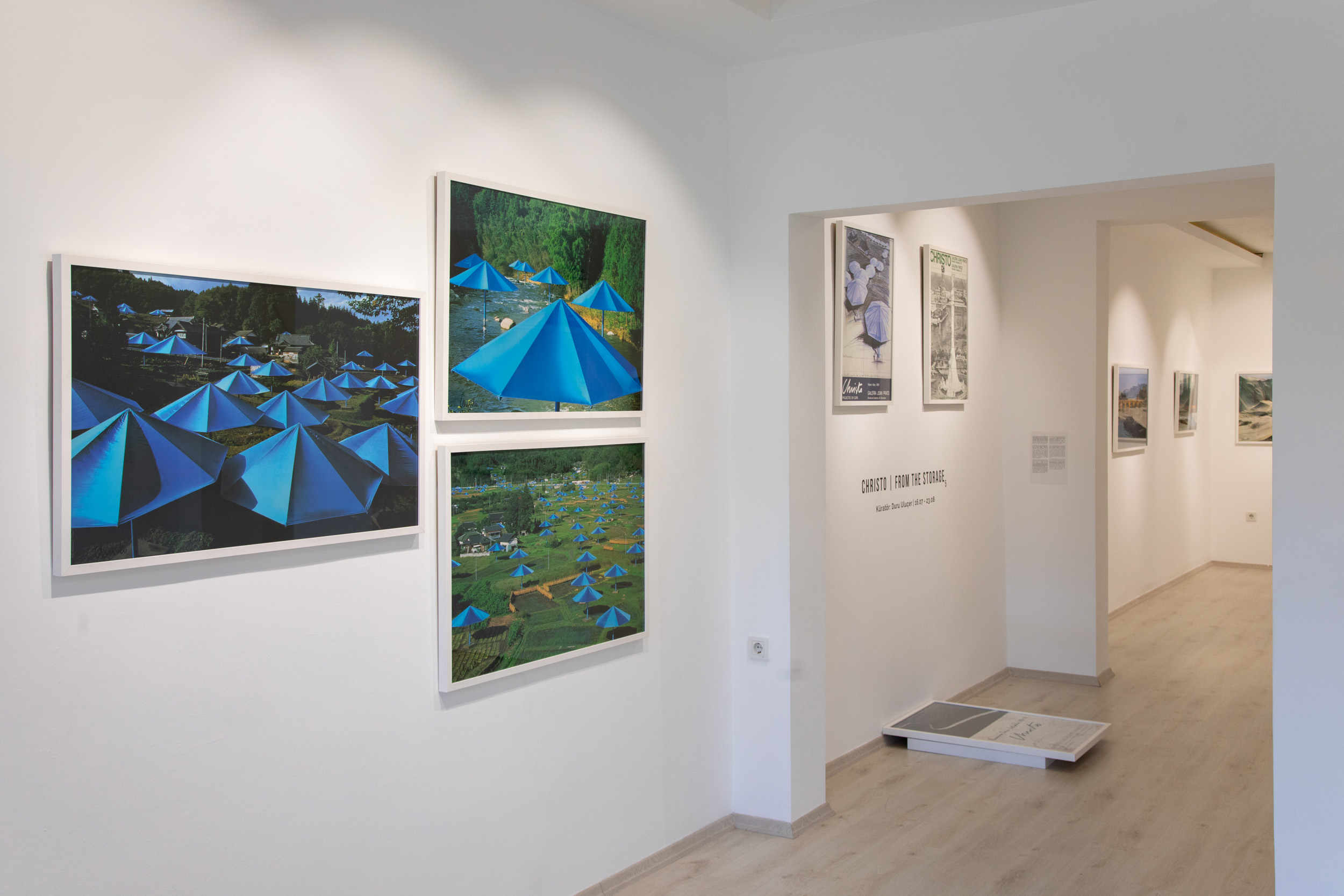
Installation view
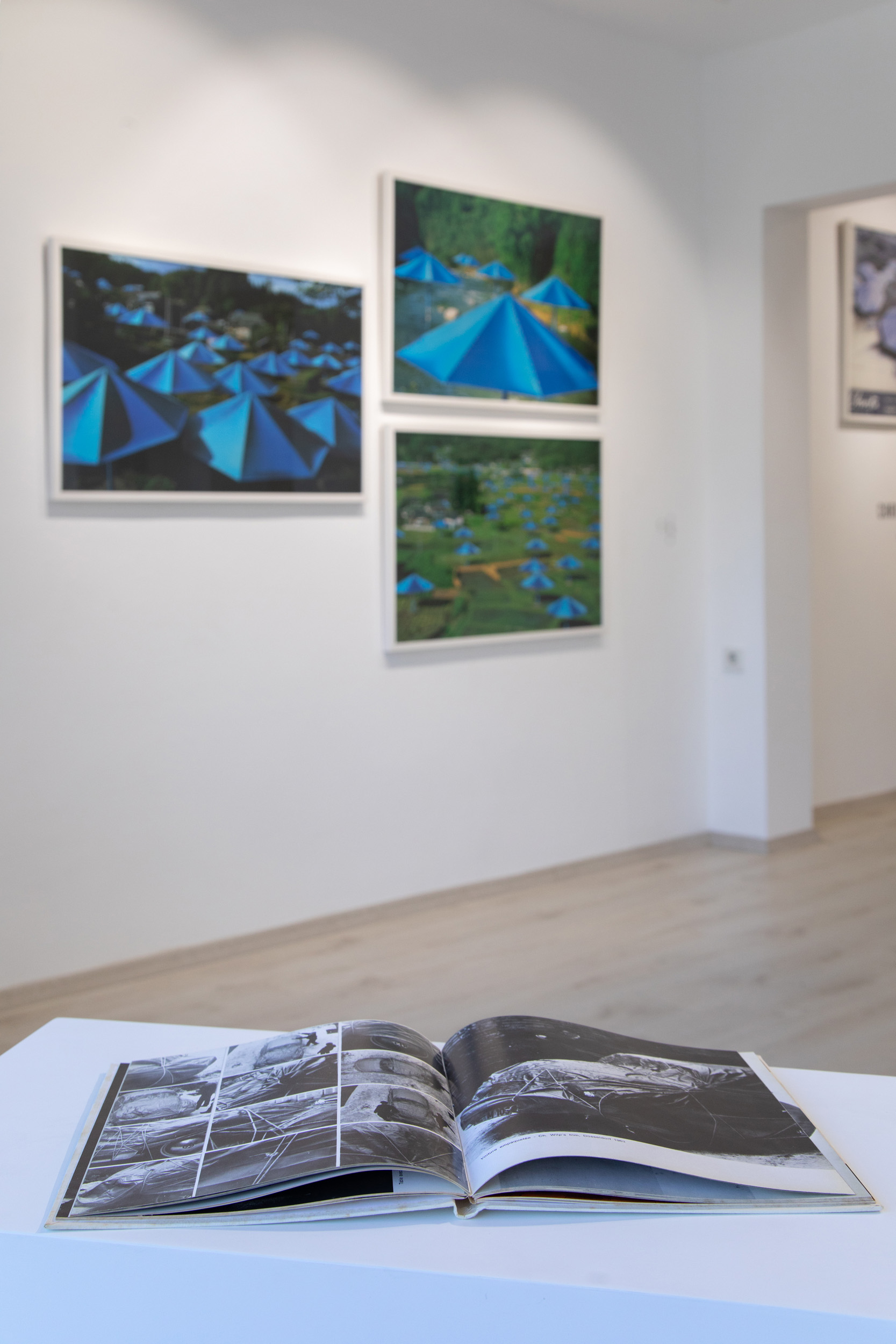
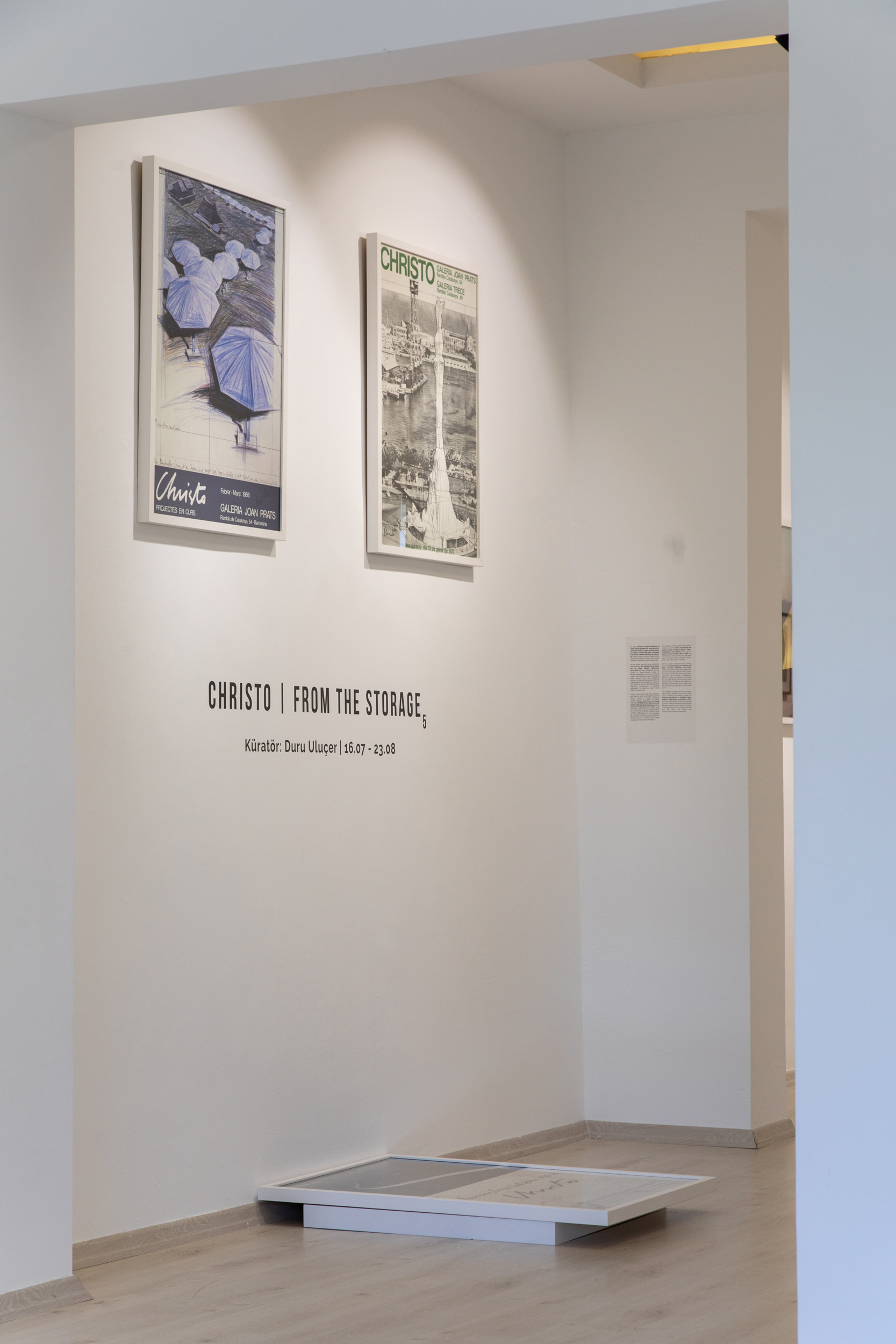
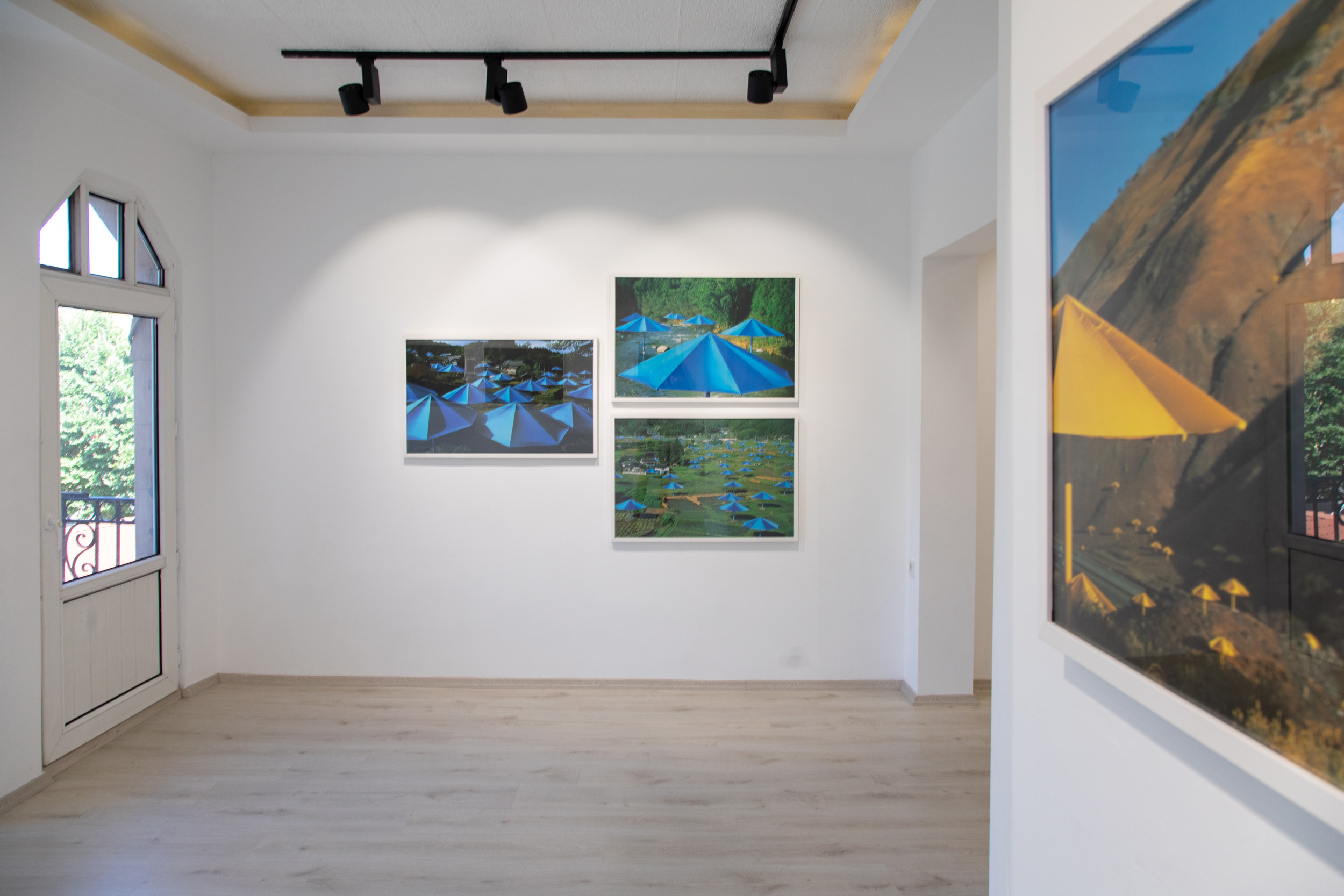
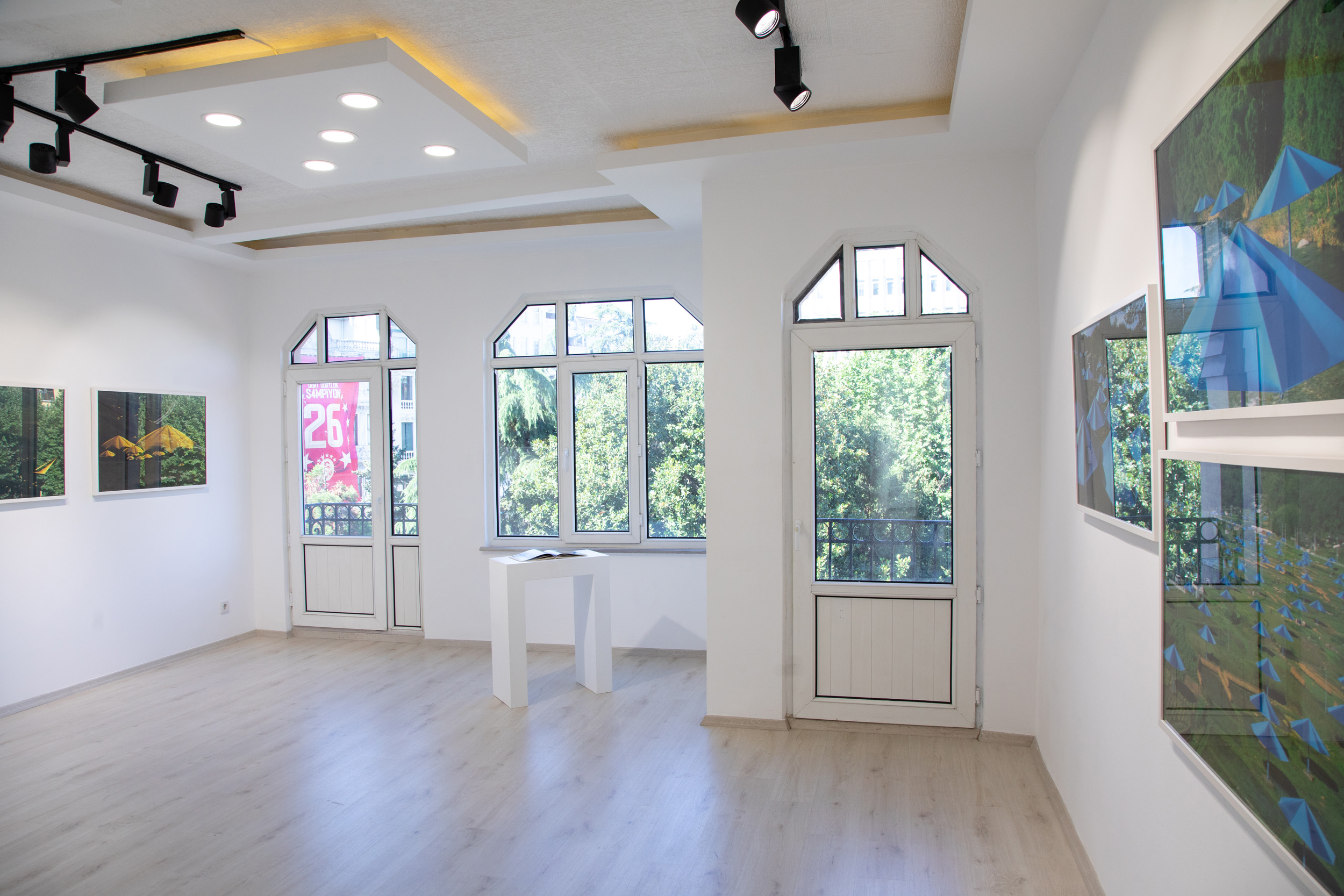
Artworks

Little Bay, property of Prince Henry Hospital, is located 14.5 kilometers southeast of the center of Sydney. The cliff-lined South Pacific Ocean shore area that was wrapped is approximately 2.4 kilometers long, 46 to 244 meters wide, 26 meters high at the northern cliffs and at sea level at the southern sandy beach. 92,900 square meters of erosion-control fabric (synthetic woven fiber usually manufactured for agricultural purposes) were used for the wrapping. 56.3 kilometers of polypropylene rope, 1.5 centimeters in diameter, tied the fabric to the rocks. Ramset guns fired 25,000 charges of fasteners, threaded studs and clips to secure the rope to the rocks.
The project was coordinated by John Kaldor. Major Ninian Melville, retired from the Army Corps of Engineers, was in charge of the climbers and workers at the site. 17,000 manpower hours, over a period of four weeks, were expended by 15 professional mountain climbers, 110 workers (architecture and art students from the University of Sydney and East Sydney Technical College), as well as a number of Australian artists and teachers. All climbers and workers were paid, with the exception of 11 architecture students who refused to be paid.
The project suffered a temporary setback when, three-quarters of the way through, a storm severely damaged sections of fabric on the wrapped coastline, requiring them to be redraped. The artists and their team completed Wrapped Coast on October 28, 1969, and the work remained on view for ten weeks. Then all materials were removed and recycled and the site was returned to its original condition.
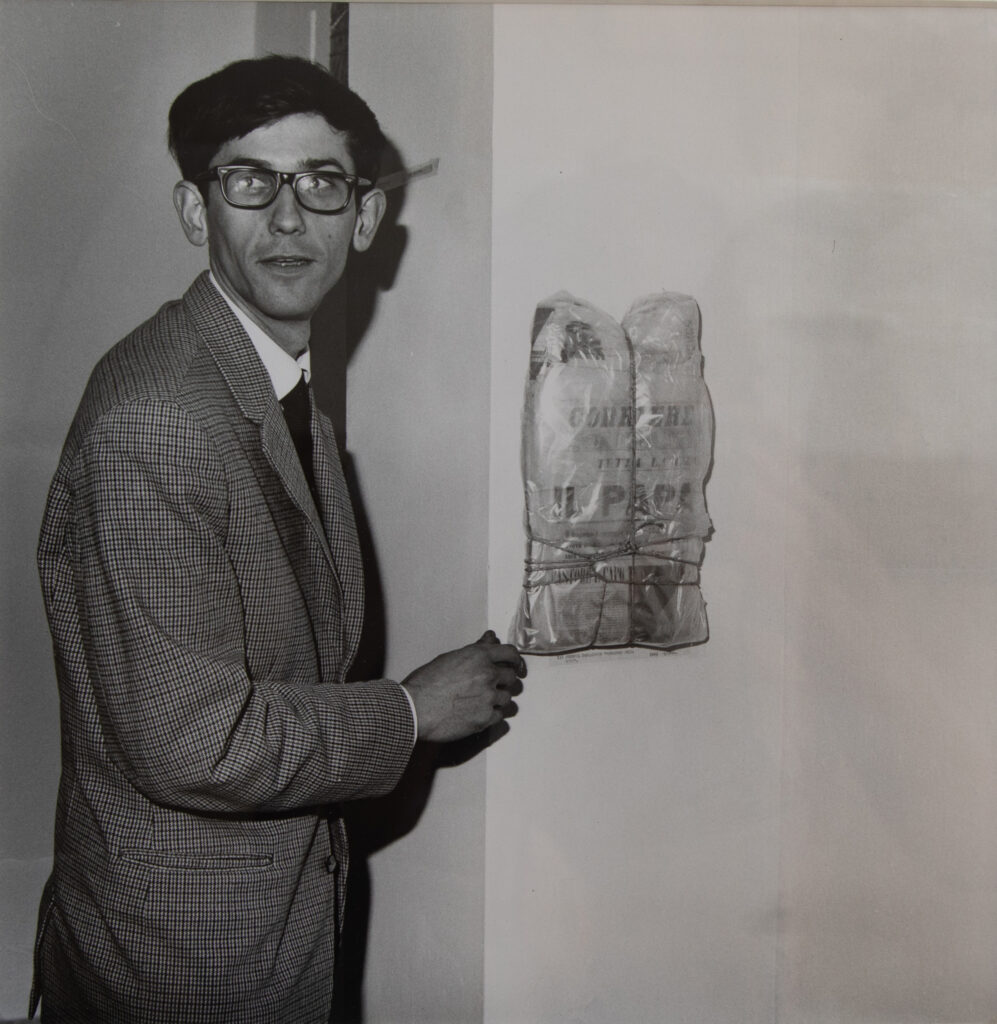
Photograph from La Salita Gallery taken in 1963
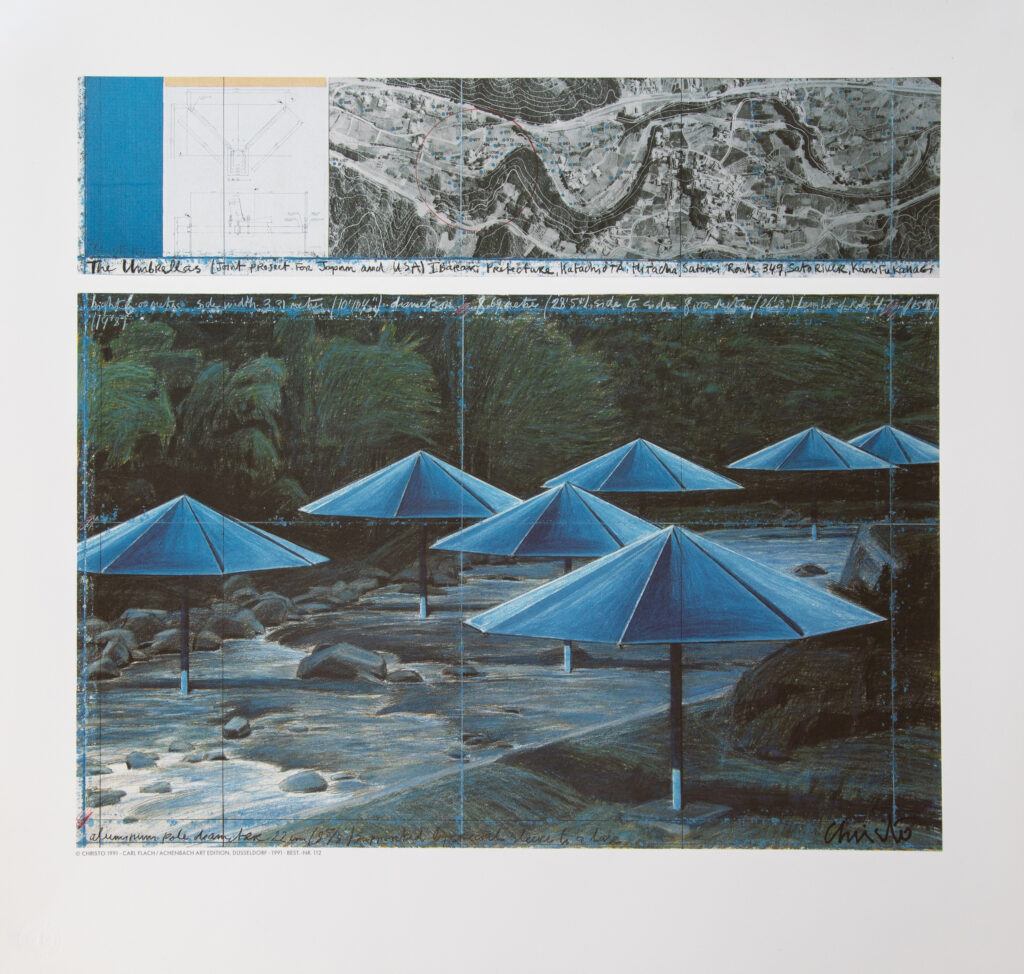
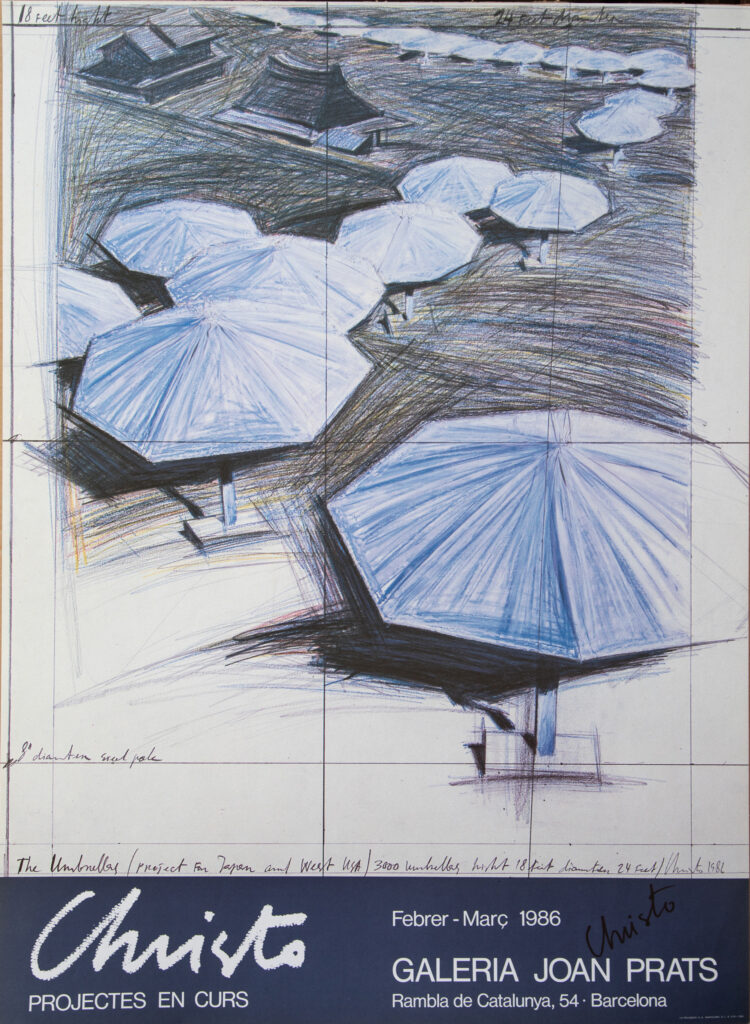
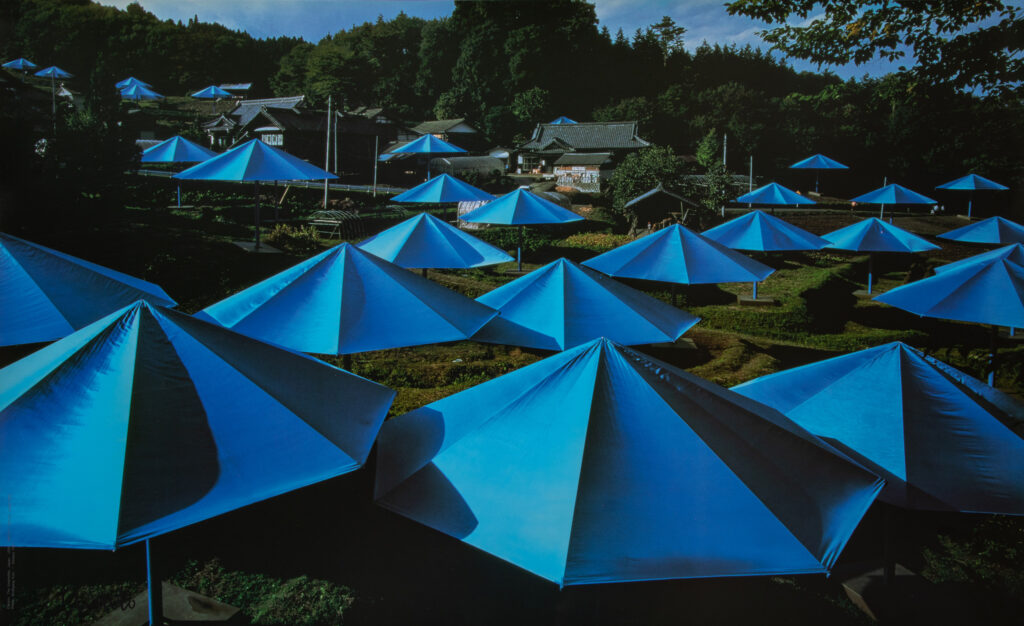
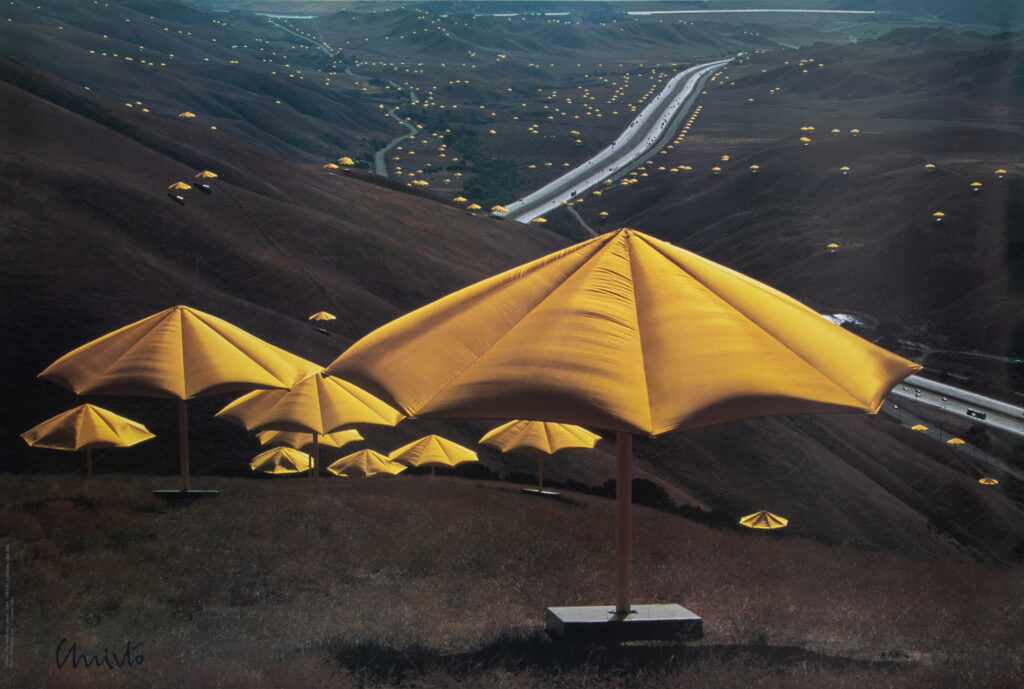
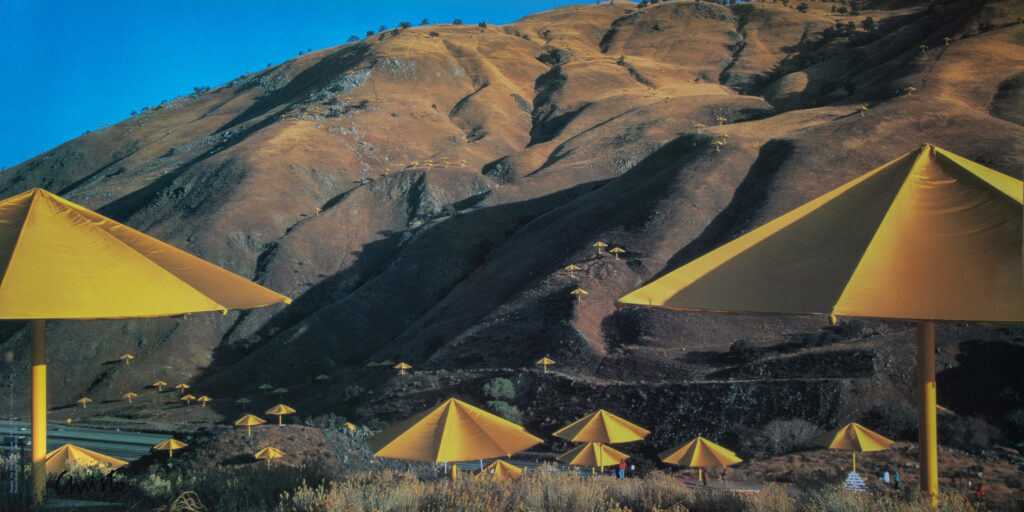
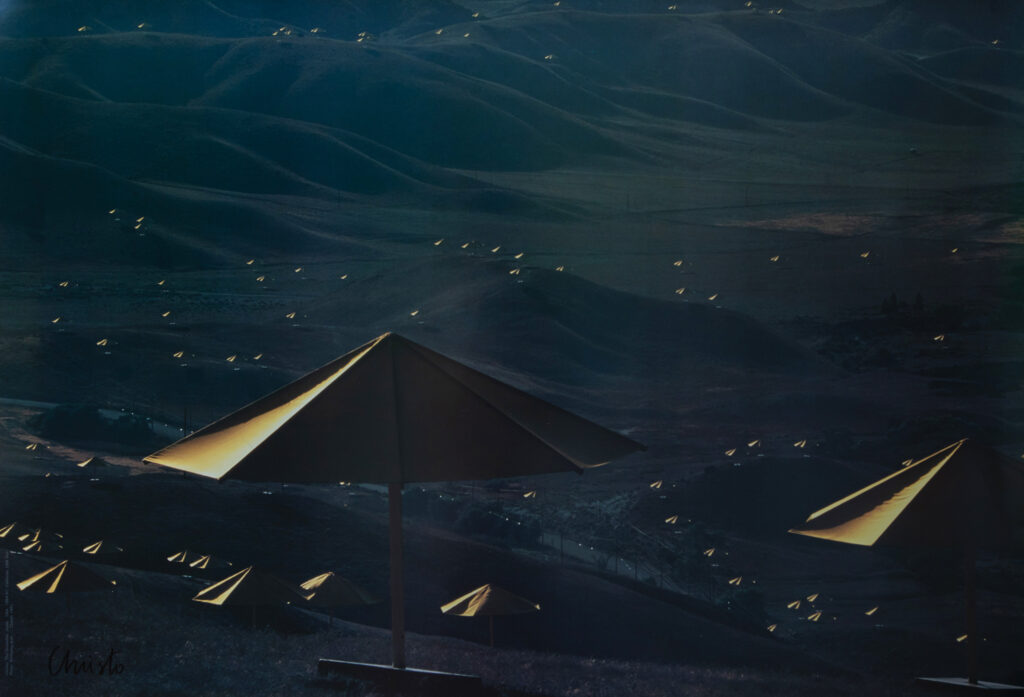
At sunrise, on October 9, 1991, Christo and Jeanne-Claude’s 1,880 workers began to open the 3,100 umbrellas in Ibaraki and California, in the presence of the artists at both sites. This Japan-USA work of art reflected the similarities and differences in the ways of life and the use of the land in two inland valleys. In the precious and limited space of Japan, the umbrellas were positioned intimately, close together and sometimes following the geometry of the rice fields. In the luxuriant vegetation enriched by water year round, the umbrellas were blue. In the California vastness of uncultivated grazing land, the configuration of the umbrellas was whimsical and spreading in every direction. The brown hills are covered by blond grass. In that dry landscape, the umbrellas were yellow.
The Umbrellas created an invitational inner space, as houses without walls, or temporary settlements and related to the ephemeral character of the work of art. For a period of eighteen days they were seen, approached, and enjoyed by the public, either by car from a distance and closer as they bordered the roads, or by walking under The Umbrellas in their luminous shadows. The removal started on October 27 and the land was restored to its original condition. The Umbrellas were taken apart and most of the elements were recycled.
The valley in Japan spans 19 kilometers and included the properties of 459 private
landowners and governmental agencies. The valley in the USA is 29 kilometers and
included the land of 25 private landowners as well as governmental agencies. Eleven manufacturers in Japan, USA, Germany and Canada prepared the various elements of the umbrellas. Christo and Jeanne-Claude’s 26 million dollar temporary work of art was entirely financed by the artists through their The Umbrellas, Joint Project for Japan and U.S.A. Corporation.
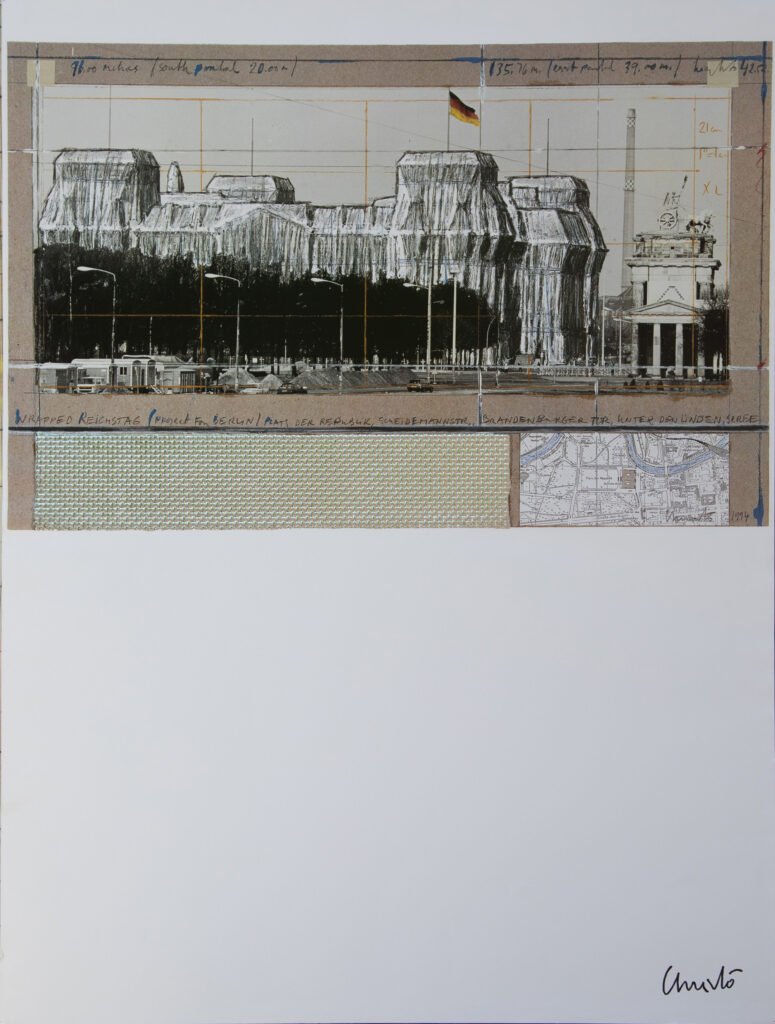
After a struggle spanning the 70s, 80s and 90s, the wrapping of the Reichstag was completed on June 24, 1995. For a period of two weeks, the richness of the silvery fabric, shaped by the blue ropes, created a sumptuous flow of vertical folds highlighting the features and proportions of the imposing structure, revealing the essence of the Reichstag.
The Reichstag stands up in an open, strangely metaphysical area. The building has experienced its own continuous changes and perturbations: built in 1894, burned in 1933, almost destroyed in 1945, it was restored in the 60s, but the Reichstag always remained the symbol of Democracy.
Throughout the history of art, the use of fabric has been a fascination for artists. From the most ancient times to the present, fabric forming folds, pleats and draperies is a significant part of paintings, frescoes, reliefs and sculptures made of wood, stone and bronze. The use of fabric on the Reichstag follows the classical tradition. Fabric, like clothing or skin, is fragile; it translates the unique quality of impermanence.
100,000 square meters of thick woven polypropylene fabric with an aluminum surface and 15.6 kilometers of blue polypropylene rope, diameter 3.2 centimeters, were used for the wrapping of the Reichstag. The façades, the towers and the roof were covered by 70 tailor-made fabric panels, twice as much fabric as the surface of the building.
The Wrapped Reichstag represents not only 24 years of efforts in the lives of the artists but also years of team work by its leading members Michael S. Cullen, Wolfgang and Sylvia Volz, and Roland Specker. The wrapping was done by 90 professional climbers and 120 installation workers. The Reichstag remained wrapped for 14 days.
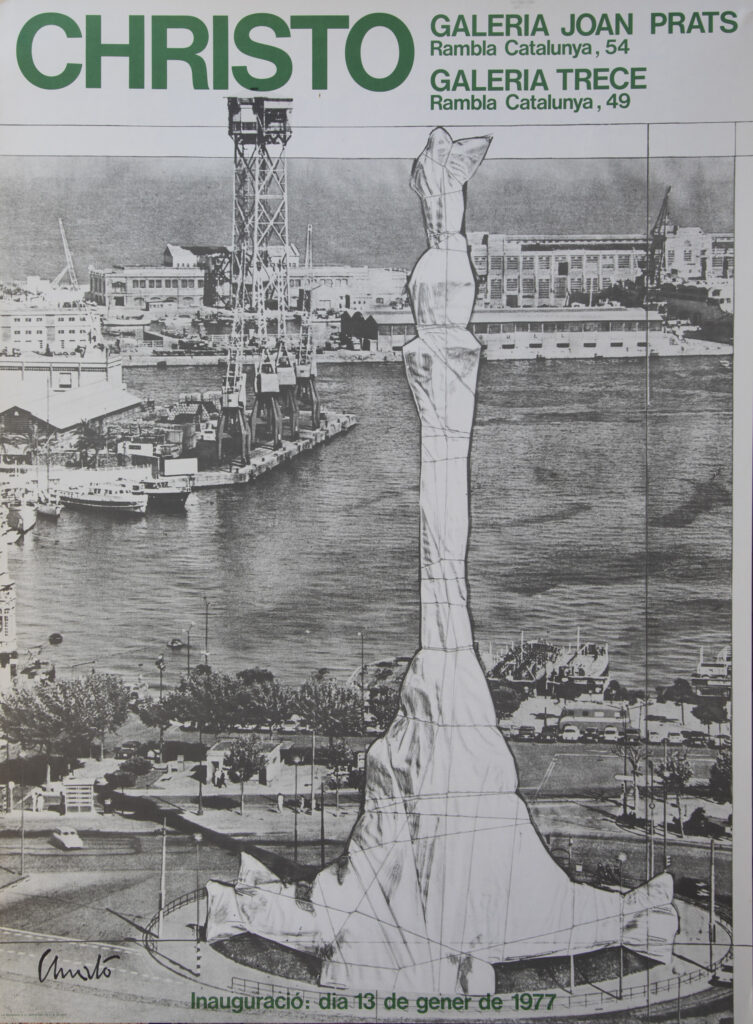
Lithographic poster
The exhibition includes nine more projects, eight of them realised and one, which exists only in drawings and collages, namely the Wrapped Monument to Cristóbal Colón, Project for Barcelona, conceived in 1975. After two initial refusals, the permit was finally granted in 1984 by Barcelona’s mayor, Pasqual Maragall. However, by that time, the concept of a wrapped monument no longer resonated with the artists, and Christo and Jeanne-Claude chose not to pursue it.
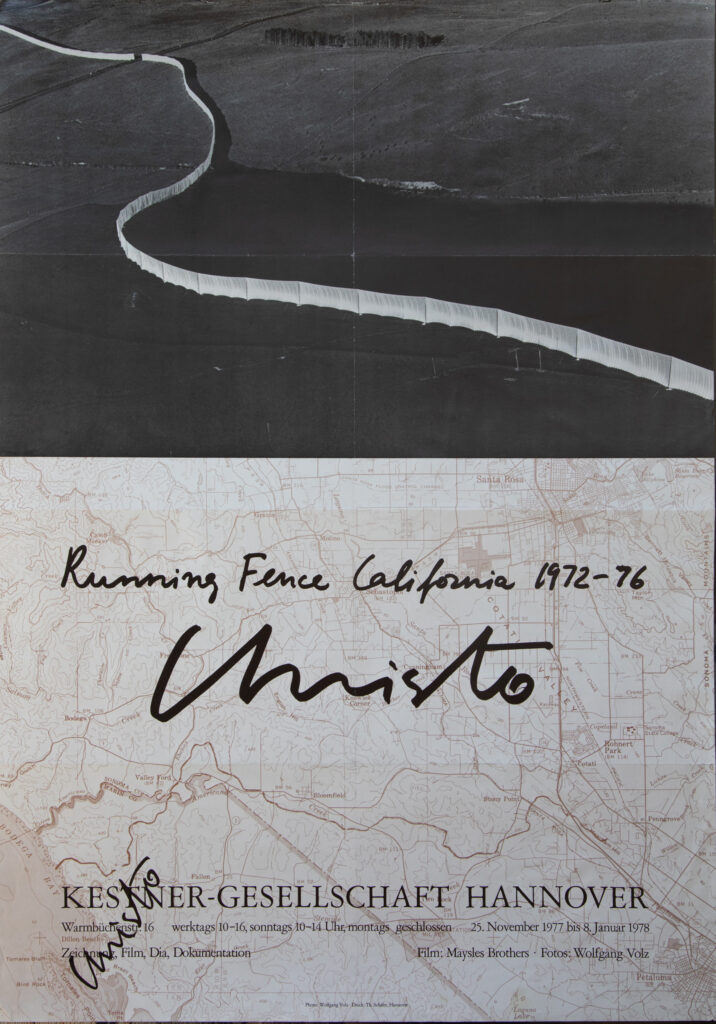
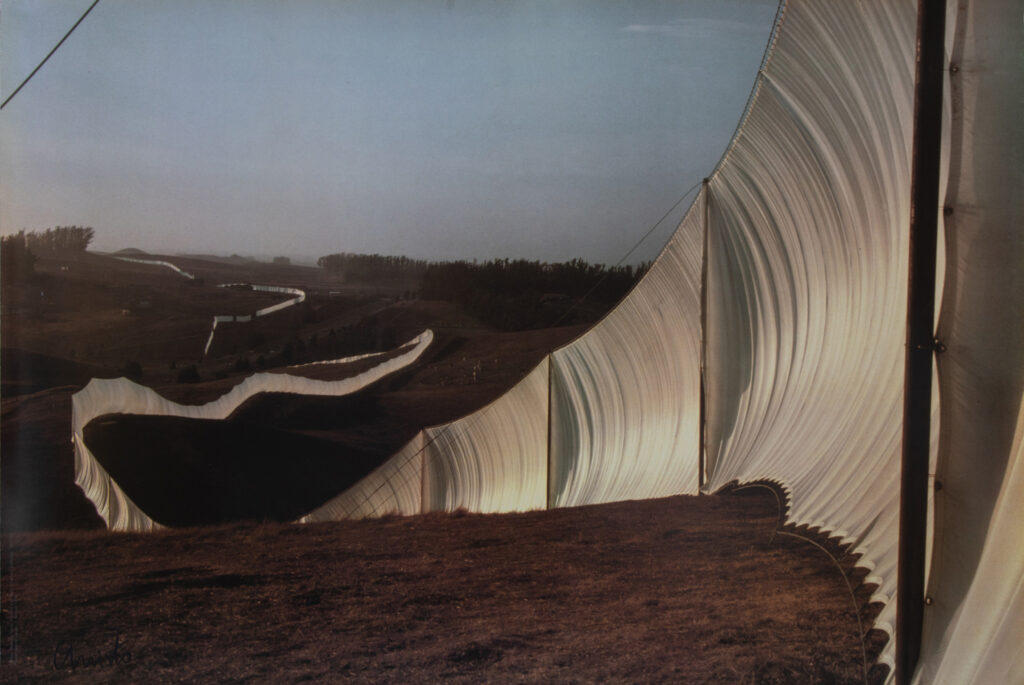
Running Fence
Sonoma and Marin Counties, California, USA, 1972-1976
Running Fence: 5.5 meters high, 39.4 kilometers long, extending east-west near Freeway 101, north of San Francisco, on the private properties of 59 ranchers, following the rolling hills and dropping down to the Pacific Ocean at Bodega Bay. The Running Fence was completed on September 10, 1976. The art project consisted of 42 months of collaborative efforts, the ranchers’ participation, 18 public hearings, three sessions at the Superior Courts of California, the drafting of a 450-page Environmental Impact Report and the temporary use of the hills, the sky and the ocean. Running Fence was made of 200,000 square meters of heavy woven white nylon fabric, hung from a steel cable strung between 2,050 steel poles (each 6.4 meters long, 8.9 cm in diameter) embedded 91 centimeters into the ground, using no concrete and braced laterally with guy wires (145 kilometers of steel cable) and 14,000 earth anchors. The top and bottom edges of the 2,050 fabric panels were secured to the upper and lower cables by 350,000 hooks.
All parts of Running Fence’s structure were designed for complete removal and no visible evidence of Running Fence remains on the hills of Sonoma and Marin Counties.
As it had been agreed with the ranchers and with county, state and federal agencies, the removal of Running Fence started 14 days after its completion and all materials were given to the ranchers. Running Fence crossed 14 roads and the town of
Valley Ford, leaving passage for cars, cattle and wildlife. It was designed to be viewed from 64 kilometers of public roads, in Sonoma and Marin Counties.
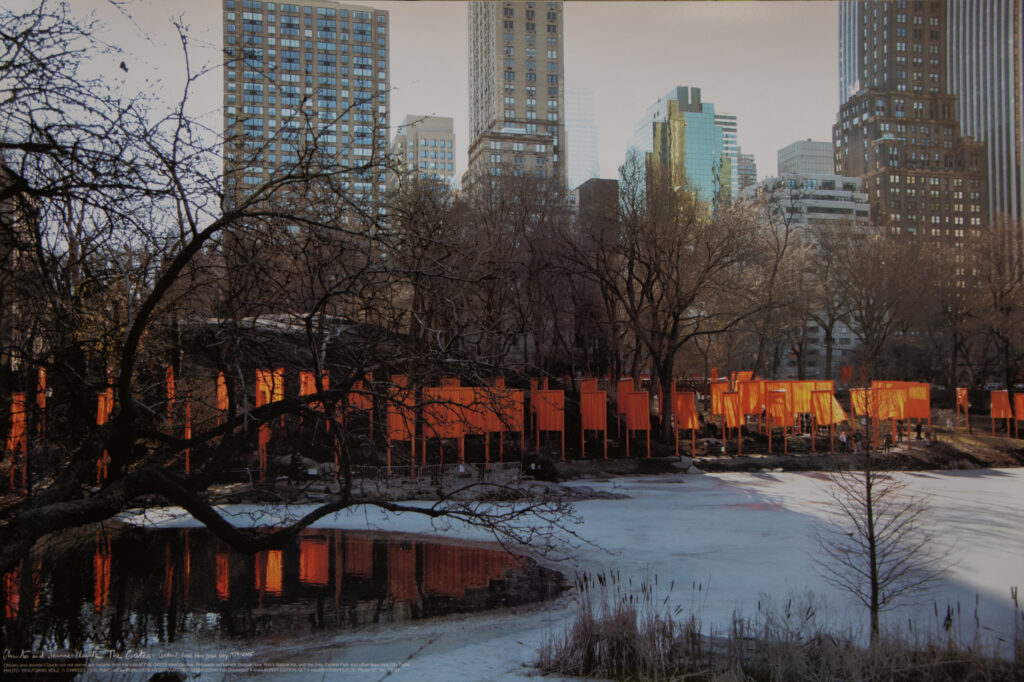
The Gates, Central Park, New York, 1979-2005
Offset lithograph on heavy stock paper
51×66
The Gates Project, Photo #27, 2005
This rare photograph #27, taken during The Central Park Gates Project in 2005 by Christo and Jeanne-Claude, was never released to the public as the couple were not satisfied with the image. Every initial photograph, numbered #25 to #30, had to be retaken by their primary photographer, Wolfgang Volz.
The installation in Central Park was completed with the blooming of the 7,503 fabric panels on February 12, 2005. The Gates could be seen from far away through the leafless branches of the trees. The grid pattern of the city blocks surrounding Central Park was reflected in the rectangular structure of the commanding saffron colored poles while the serpentine design of the walkways and the organic forms of the bare branches of the trees were mirrored in the continuously changing rounded and sensual movements of the free-flowing fabric panels in the wind.
The 7,503 gates were 4.87 meters tall and varied in width from 1.68 to 5.48 meters according to the 25 different widths of walkways, on 37 kilometers of walkways in Central Park. Free-hanging saffron colored fabric panels, suspended from the horizontal top part of the gates, came down to approximately 2.13 meters above the ground.
The gates were spaced at 3.65 meter intervals, except where low branches extended above the walkways. The vertical poles were secured by 15,006 narrow steel base footings, 278 to 380 kilograms each, positioned on the paved surfaces. No holes were made in the ground. The gates’ components were fabricated, off-site, by seven manufacturers located on the East Coast of the USA. The weaving and sewing of the fabric panels was done in Germany. In teams of eight, 600 workers wearing TheGates uniforms were responsible for installing 100 gates per team. The monitoring and removal teams included an additional 300 uniformed workers.
The work of art remained for 16 days, then the gates were removed and the materials recycled.
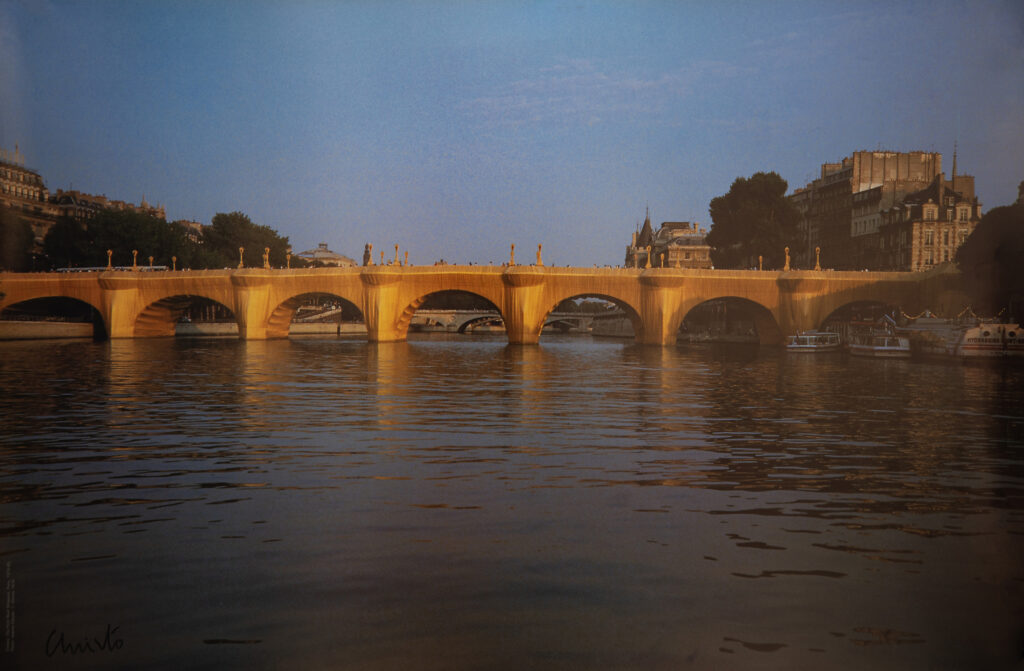
On September 22, 1985, a group of 300 professional workers completed The Pont Neuf Wrapped. They had deployed 41,800 square meters of woven polyamide fabric, silky in appearance and golden sandstone in color, covering:
· The sides and vaults of the twelve arches, without hindering river traffic.
· The parapets down to the ground.
· The sidewalks and curbs (pedestrians walked on the fabric).
· All the street lamps on both sides of the bridge.
· The vertical part of the embankment of the western tip of the Île de la Cité.
· The Esplanade of the Vert-Galant.
Begun under Henri III, the Pont Neuf was completed in 1606, during the reign of Henry IV. No other bridge in Paris offers such topographical and visual variety, today as in the past. From 1578 to 1890, the Pont Neuf underwent continual changes and additions of the most extravagant sort, such as the construction of shops on the bridge under Soufflot, the building, demolition, rebuilding and once again demolition of the massive rococo structure which housed the Samaritaine’s water pump.
Wrapping the Pont Neuf continued this tradition of successive metamorphoses by a new sculptural dimension and transformed it, for 14 days, into a work of art. Ropes held down the fabric to the bridge’s surface and maintained the principal shapes, accentuating relief while emphasizing proportions and details of the Pont Neuf.
The fabric was restrained by 13 kilometers of rope and secured by 12.1 tons of steel chains. The Charpentiers de Paris and the French subcontractors were assisted by the US engineers who had worked on Christo and Jeanne-Claude’s previous projects, under the direction of Theodore Dougherty: Vahé Aprahamian, August
L. Huber, James Fuller, John Thomson and Dimiter Zagoroff. 600 monitors, in crews of 40, were working around the clock maintaining the project and giving information, until its removal on October 7.
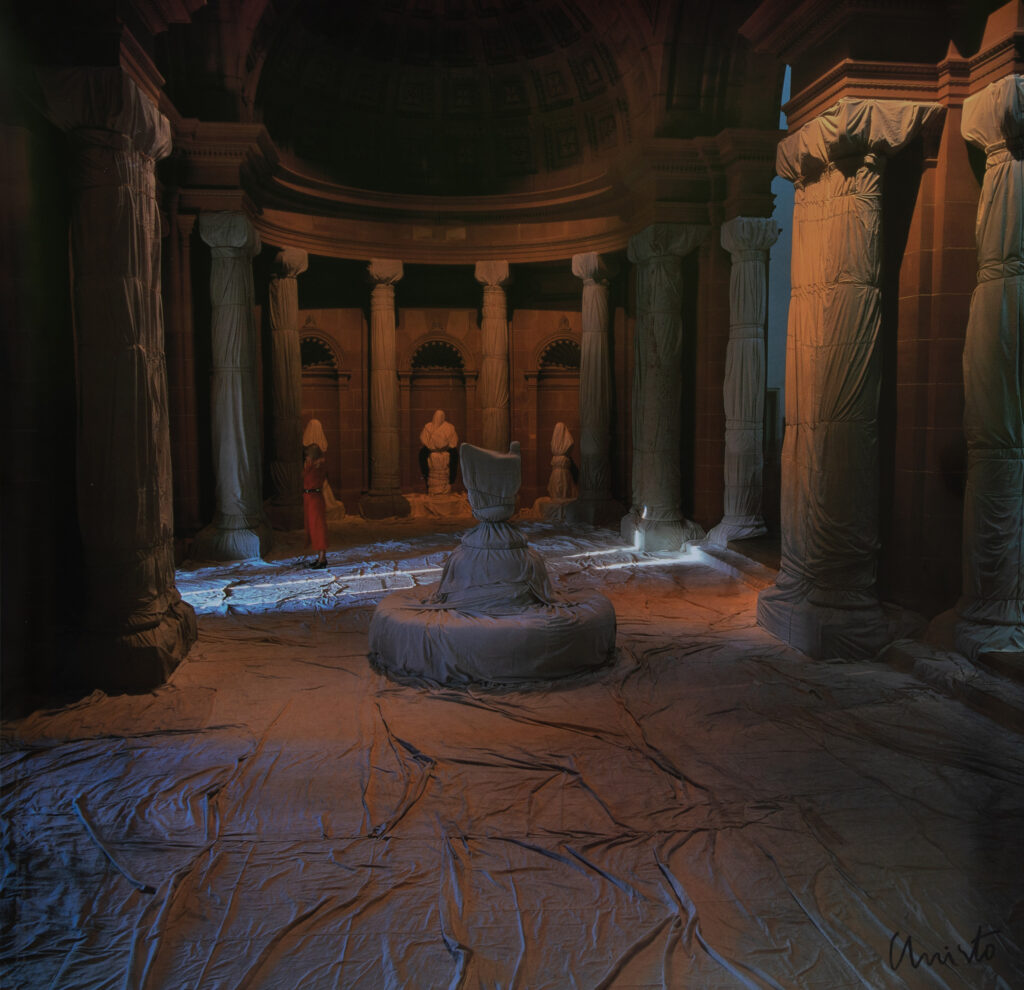
Art Gallery of New South Wales, Sydney, Australia,1990
Less known to the general public, Christo and Jeanne-Claude’s indoor installations are represented in the exhibition by a photograph of Wrapped Vestibule, Art Gallery of New South Wales (Sydney, 1990). The artist couple realized several similar interventions in public museums, and although art critics may read this body of work in the vein of institutional critique, Christo and Jeanne-Claude refrained from discussing it beyond the play of concealing and revealing and entering into a dialogue with art history (the statues and the architecture of the gallery).
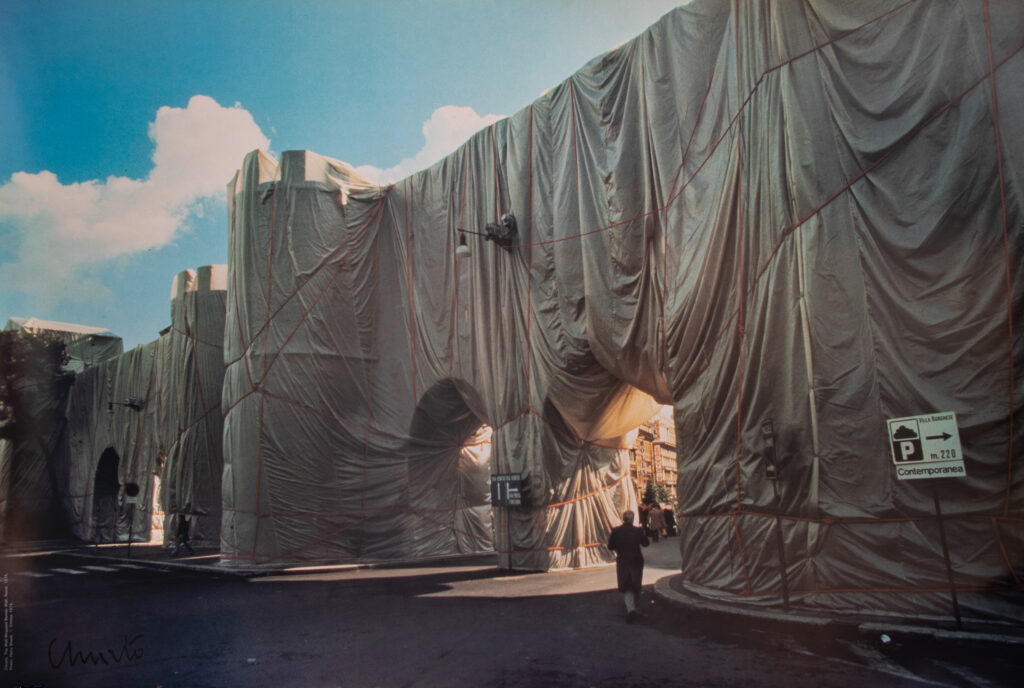
The Wall – Wrapped Roman Wall
Via Veneto and Villa Borghese, Rome, 1973 – 74
Offset Lithograph
64×95
In February and March 1974, for a period of 40 days, a 820-foot long section of the Aurelian Walls was wrapped in polypropylene and rope, covering both sides, the top and the arches of the wall. Forty construction workers completed the temporary work of art in four days.
The nearly 2,000-year old wall was built by the Roman Emperors Aurelian and Probus and used to surround the city of Rome, Italy. The section selected by the artists for their temporary work of art was situated at the end of the Via Veneto, one of the busiest avenues of Rome, and at the edge of the gardens of the Villa Borghese.
The project was coordinated by longtime friend Guido Le Noci, owner of the Galleria Apollinaire, who had given Christo two personal exhibitions in 1963.
Out of the four arches that were wrapped, three arches were heavily used by car traffic and one arch was reserved for pedestrians.
The Wrapped Roman Wall was financed by Christo and Jeanne-Claude through the sale of preparatory studies made by Christo: drawings, collages, scale models, as well as early packages and lithographs. The artists did not accept sponsorship of any kind.
After 40 days the workers started the removal and all materials were recycled.
Height: 49 feet (15 meters)
Length: 820 feet (250 meters)
Depth: varying between 13 to 18 feet (4.3 to 5.5 meters)
Materials: woven polypropylene fabric and Dacron rope
About the series
From the Storage is a recurring exhibition format where the gallery team selects and presents remarkable works from private collections and the gallery’s storage, highlighting different artists, periods, and artistic approaches through each edition.
The fifth edition focuses on Christo, one of the most influential artists of the twentieth century, whose visionary practice transformed the way we perceive architecture, landscape, and public space.